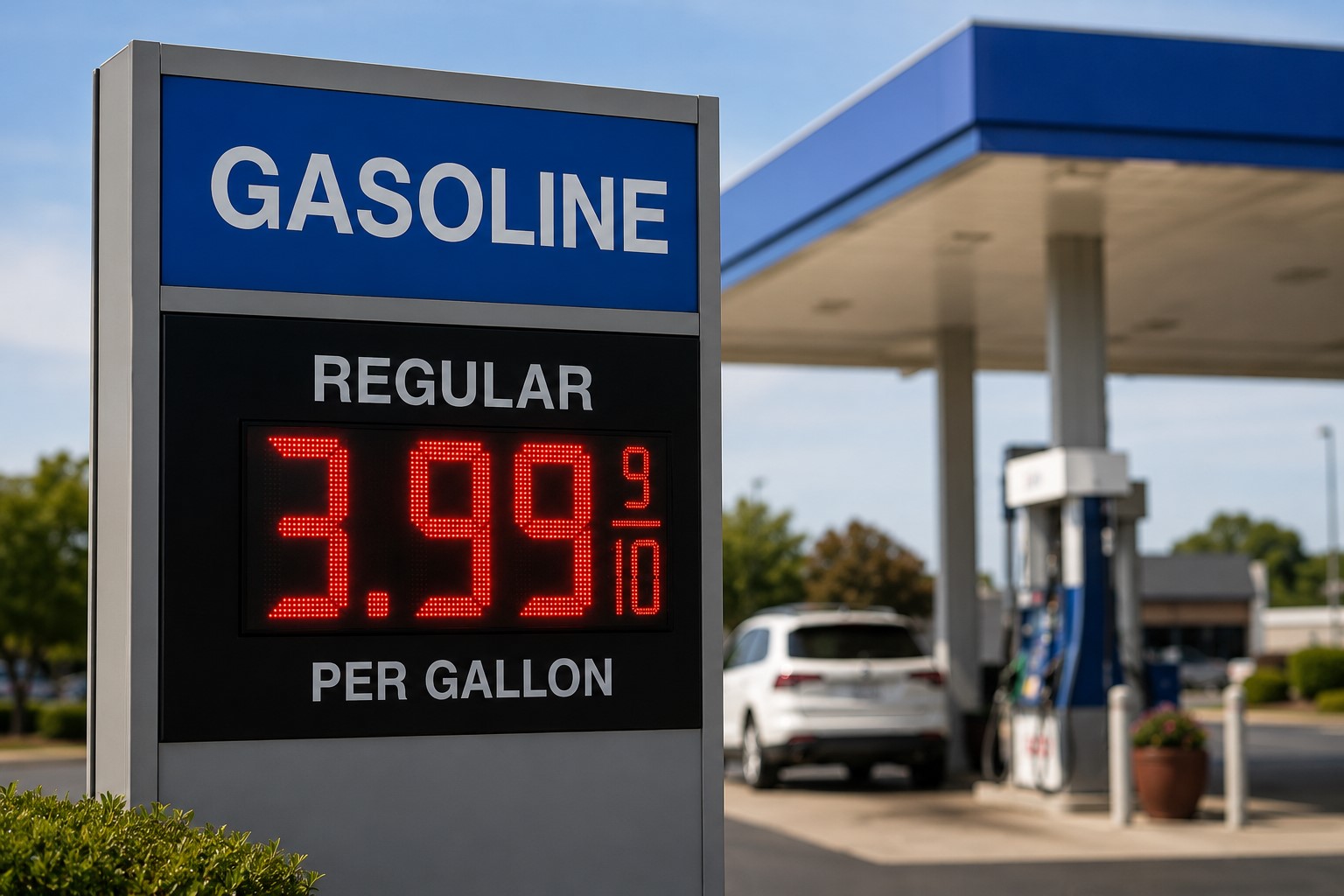
Gasoline prices across the United States have continued to decline following a recent peak, offering some relief to consumers after months of volatility linked to the conflict between the United States, Israel, and Iran.
According to AAA data, the national average price for a gallon of regular gasoline fell to $3.999 on Friday morning, down significantly from this year's high of $4.56 per gallon. Despite the recent decline, fuel prices remain more than 34% higher than they were before the war began on Feb. 28.
The drop in gas prices has been driven largely by falling crude oil prices. Oil markets have seen a sharp correction over the past two weeks, with prices declining more than 15% as investors grew increasingly optimistic about the prospects for peace following a ceasefire agreement involving Iran.
On Thursday, U.S. crude oil settled at $76.60 per barrel, marking its largest weekly decline since April. International benchmark Brent crude closed at $79.85 per barrel. Oil trading was paused Friday in observance of the Juneteenth holiday.
While the easing of oil prices has helped reduce pressure at the gas pump, analysts caution that further declines may be limited. Emergency supplies from commercial reserves and government stockpiles have helped stabilize energy markets during the conflict, but inventory levels have reportedly fallen to concerning levels.
Although Washington and Tehran have signed a memorandum of understanding aimed at ending hostilities, a comprehensive peace agreement remains dependent on a 60-day negotiation process. Uncertainty also persists around the Strait of Hormuz, a key global energy shipping route that previously handled more than one-fifth of the world's oil and energy supplies.
Energy industry leaders warn that the current stability may not last indefinitely. Chevron CEO Mike Wirth said the effectiveness of measures designed to offset supply disruptions could weaken in the coming months.
"The real question is how much longer these measures can continue to reduce the risk," Wirth said in an interview with Bloomberg. He suggested that market pressures could intensify by July or August if underlying supply concerns are not resolved.
For now, drivers are benefiting from lower fuel prices, but energy markets remain sensitive to geopolitical developments and potential disruptions in global oil supply chains.


Comments (0)
Sign in to join the conversation.