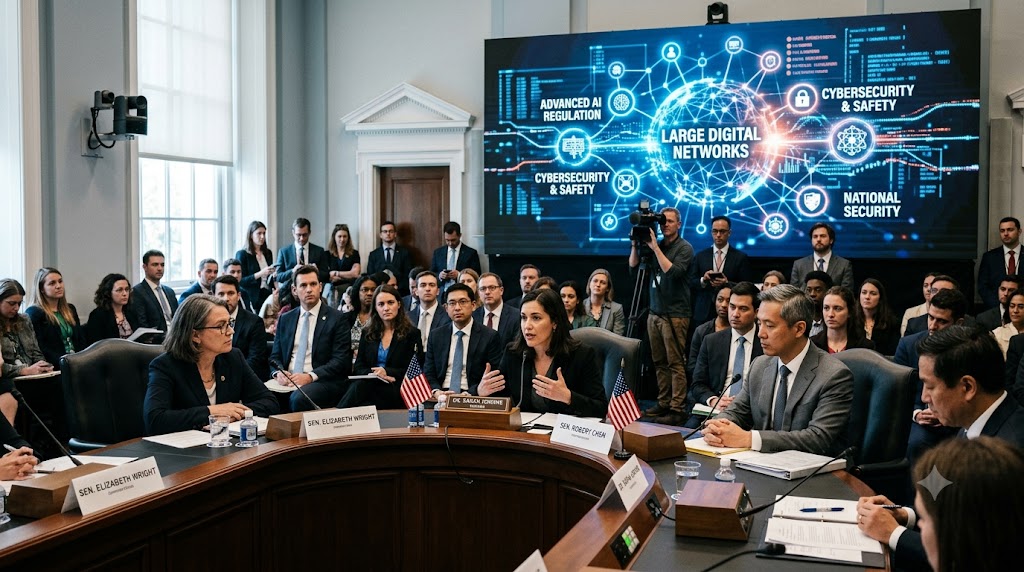
U.S. senators are negotiating new legislation that could impose stronger safety obligations on companies developing advanced artificial intelligence systems, as Washington faces growing concerns about AI misuse, cybersecurity and national security.
Senate Considers AI “Duty of Care”
Bipartisan Senate negotiators are discussing legislation that would require leading AI developers to take reasonable steps to prevent their systems from causing or enabling major catastrophic risks.
The proposed framework could require companies developing advanced AI models to establish stronger safeguards against threats involving biological weapons, nuclear weapons and serious cybersecurity attacks.
The discussions could affect major AI companies including Google, OpenAI and Anthropic, particularly as their systems become increasingly capable of performing complex tasks.
AI Testing Could Become a Bigger Requirement
Under the proposal being discussed, the federal government could have greater authority to intervene when an AI model presents serious safety concerns. Companies could also be required to conduct additional testing, including assessments at U.S. national laboratories.
The legislation remains under negotiation, and important details—including how the rules would be enforced—have not yet been finalized.
AI Regulation Becomes a Major U.S. Technology Debate
The discussions come as AI companies face increasing pressure over the potential misuse of increasingly powerful models.
AI safety, cybersecurity and federal regulation are becoming major issues for the U.S. technology industry. Lawmakers are now weighing how to protect national security without slowing the development of technologies considered strategically important to the United States.
With Congress facing a tight schedule ahead of the November elections, the timing of any final legislation remains uncertain.


Comments (0)
Sign in to join the conversation.