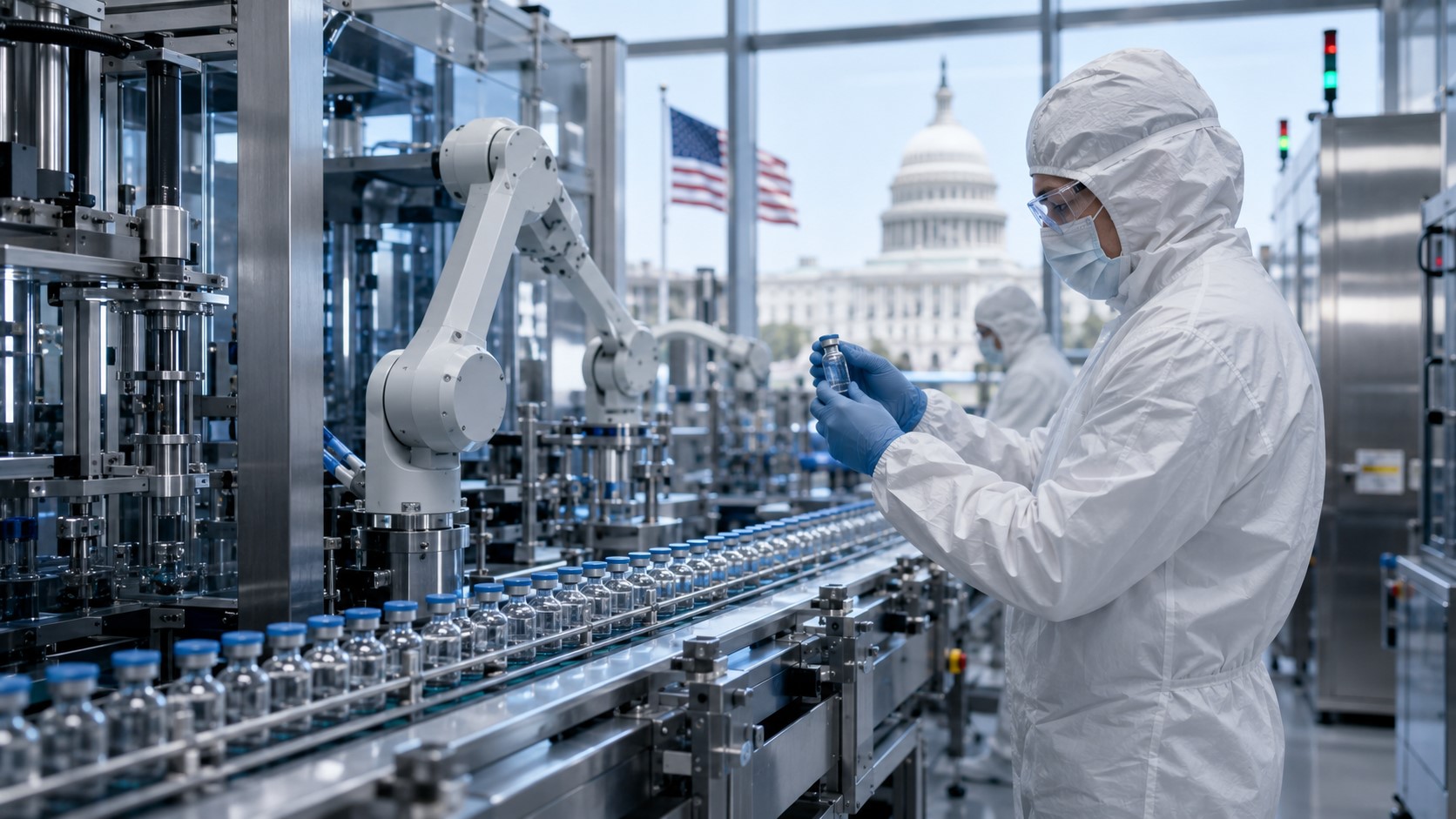
WASHINGTON, D.C. — The White House has unveiled a new tariff policy targeting imported generic medicines, marking one of the administration's most significant healthcare and manufacturing initiatives this year. Under the plan, 100% tariffs on imported generic drugs are scheduled to begin in 2028, with the rate increasing to 200% after the initial year, as part of an effort to encourage pharmaceutical companies to manufacture more medicines within the United States.
Administration officials say the policy is designed to strengthen domestic pharmaceutical production, reduce reliance on overseas manufacturing, and improve the resilience of the nation's medical supply chain. The announcement represents a notable shift from previous trade policies, which had largely exempted generic medicines from broad tariff measures.
Industry analysts say the proposal could influence long-term investment decisions by pharmaceutical manufacturers, potentially leading to expanded production facilities and new jobs in the United States. However, healthcare experts are also closely monitoring the potential effects on medicine pricing, supply chains, and access to affordable generic medications over the coming years.
The tariff announcement comes amid a broader strategy to expand domestic manufacturing across several critical industries. Business leaders, healthcare providers, and policymakers are expected to continue evaluating the proposal as implementation plans develop and additional guidance is released.
Comments (0)
Sign in to join the conversation.