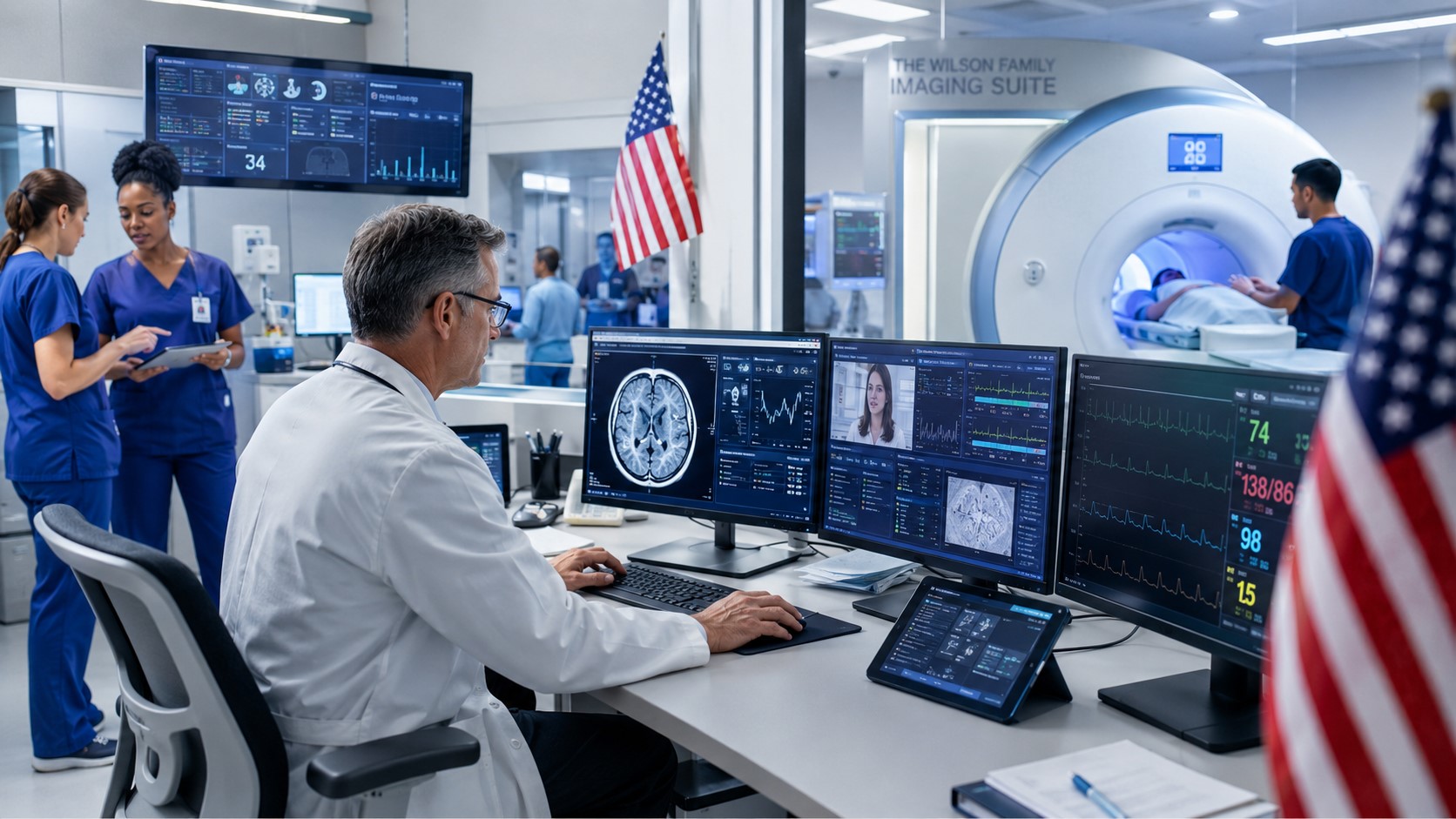
WASHINGTON, D.C. — Healthcare providers across the United States are increasing investments in artificial intelligence and digital health technologies as hospitals seek to improve patient outcomes, streamline operations, and address growing demand for medical services.
Medical systems are expanding the use of AI-powered clinical decision support, medical imaging analysis, electronic health record automation, and predictive analytics to help physicians identify health risks earlier and optimize treatment planning. Industry experts say these technologies are reducing administrative burdens while allowing healthcare professionals to spend more time with patients.
Hospital executives also continue investing in telehealth platforms, remote patient monitoring, and cybersecurity protections as digital healthcare becomes a larger part of everyday clinical practice. Analysts note that stronger digital infrastructure is helping hospitals improve care coordination while enhancing patient access to specialists, particularly in underserved communities.
Healthcare organizations emphasize that AI tools are designed to support—not replace—medical professionals. Physicians remain responsible for diagnosis and treatment decisions, while AI systems assist by rapidly analyzing large volumes of clinical information and identifying potential patterns that may require further evaluation.
As federal agencies, healthcare providers, and technology companies continue collaborating on responsible AI deployment, experts expect digital health innovation to remain one of the fastest-growing sectors in the U.S. healthcare industry throughout 2026, supporting improved patient safety, operational efficiency, and long-term healthcare resilience.



Comments (0)
Sign in to join the conversation.