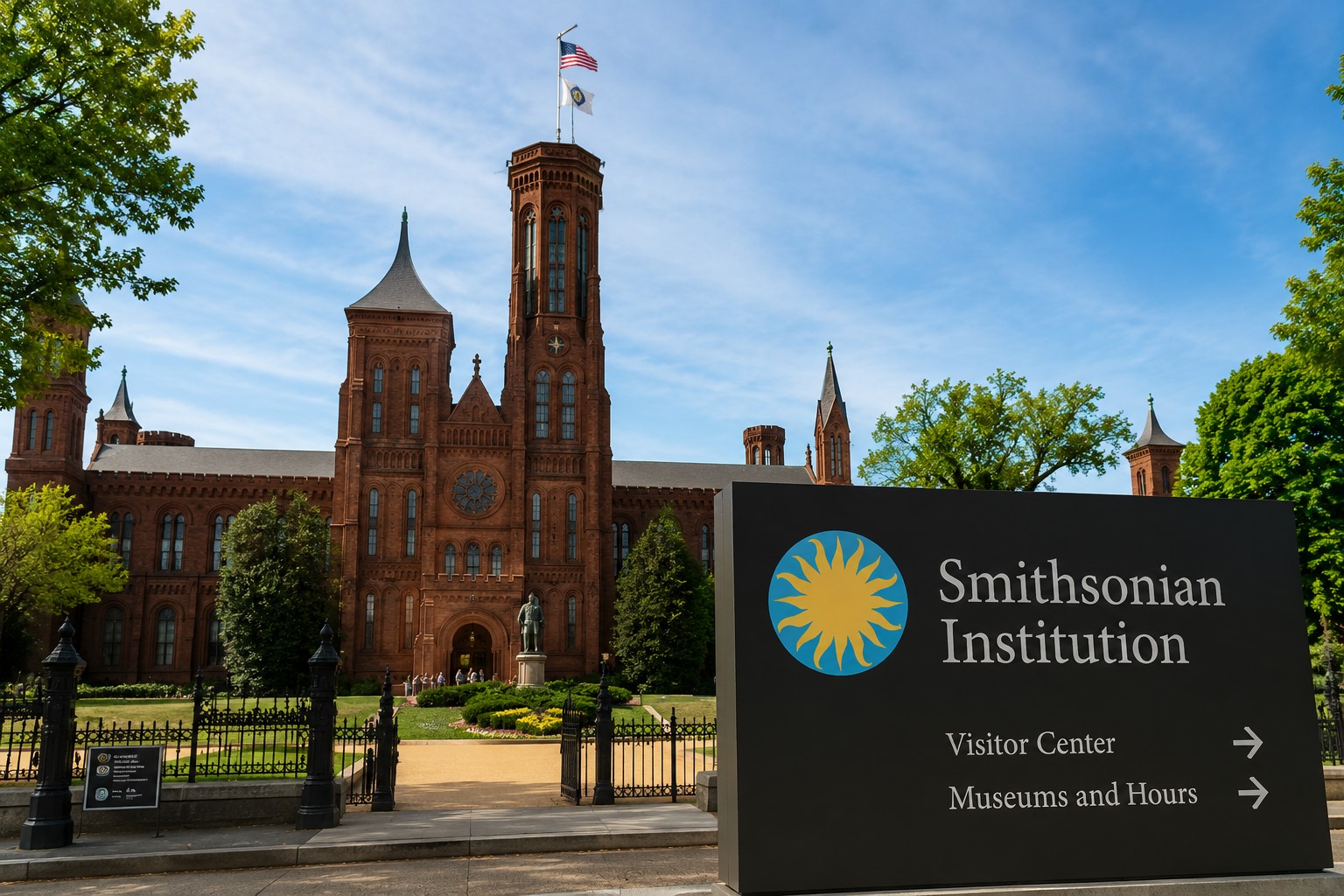
White House Report Accuses Smithsonian Leadership of Promoting Radical Ideology
A new White House report has accused the leadership of the Smithsonian Institution of promoting what it describes as "radical ideological" perspectives in museum exhibitions, educational programs, and public outreach, intensifying the ongoing debate over how American history and culture should be presented in publicly funded institutions.
The report argues that some Smithsonian museums have increasingly emphasized politically charged themes involving race, identity, gender, and social justice, while giving insufficient attention to broader historical context and national achievements. According to the administration, federal cultural institutions should present balanced, fact-based accounts of American history rather than promoting viewpoints that could be seen as politically partisan.
White House officials said the review was conducted as part of a broader effort to ensure that federally supported museums remain politically neutral and accurately reflect the nation's history. The report recommends greater oversight of exhibit development, educational materials, and leadership accountability to ensure public institutions maintain what it describes as ideological balance.
The Smithsonian Institution, the world's largest museum, education, and research complex, oversees numerous museums, galleries, and research centers across Washington, D.C., and receives a significant portion of its funding from the federal government. While the institution operates independently, its governance structure includes federal oversight, making it a frequent subject of political scrutiny.
Supporters of the report argue that national museums should avoid advancing political agendas and instead focus on presenting history in a balanced and inclusive manner. They contend that publicly funded institutions have a responsibility to represent diverse perspectives without favoring particular ideological viewpoints.
Critics, however, say the accusations risk politicizing museums and undermining academic independence. Historians and museum professionals have argued that examining difficult aspects of American history—including slavery, civil rights, Indigenous history, and social inequality—is an essential part of providing visitors with a complete understanding of the nation's past.
The report is expected to fuel renewed debate in Washington over the role of federally funded cultural institutions, museum governance, and the extent to which government officials should influence exhibitions and educational programming. The issue also reflects broader national disagreements over history education, public memory, and the interpretation of America's cultural heritage.
While the White House has called for reforms aimed at increasing transparency and ideological neutrality, the Smithsonian has not indicated whether it plans to make changes in response to the report. The debate is likely to continue as policymakers, historians, and cultural leaders weigh the balance between institutional independence and public accountability.

Comments (0)
Sign in to join the conversation.