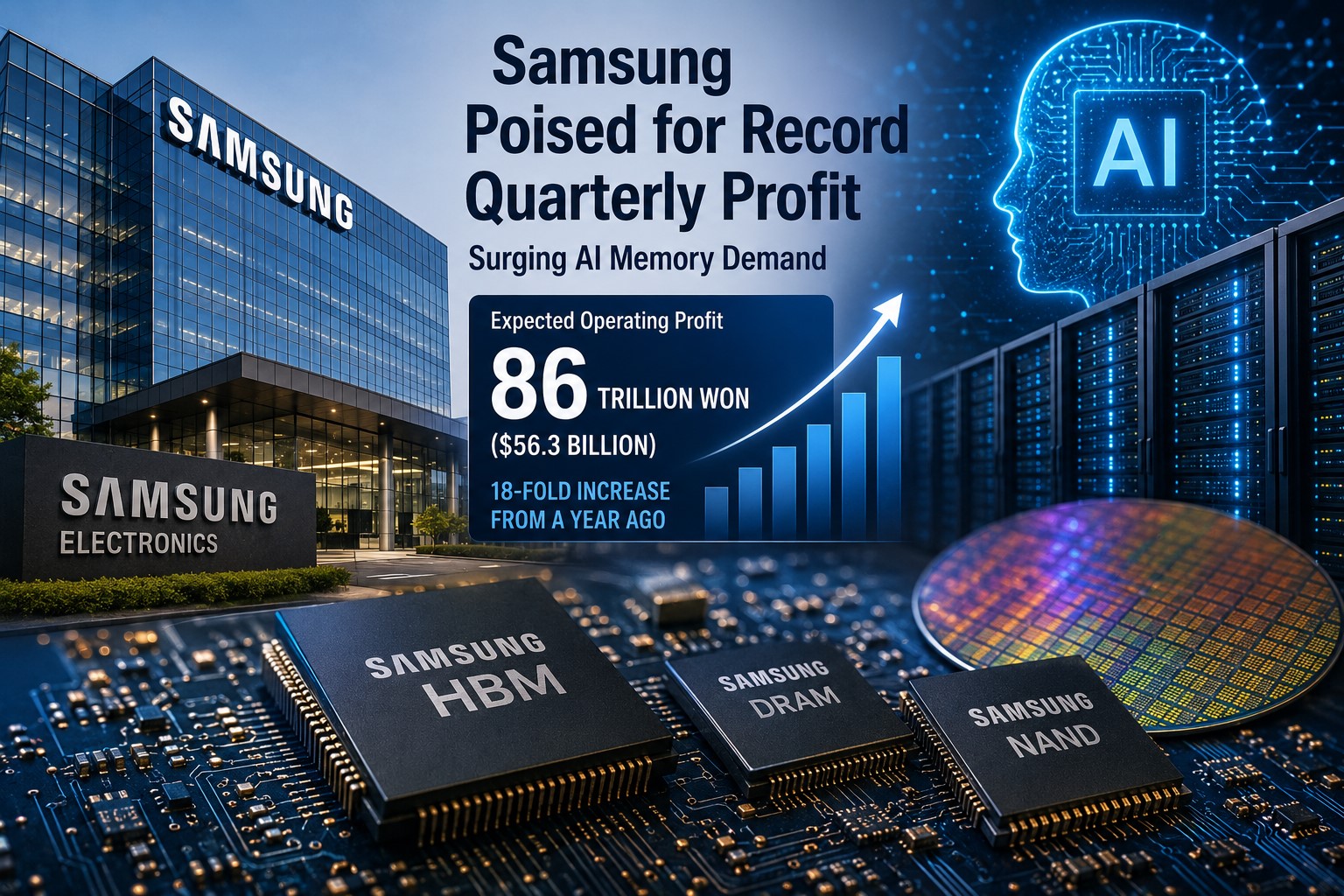
Samsung Poised for Record Quarterly Profit on Surging AI Memory Demand
Samsung Electronics is expected to report another record-breaking quarterly profit as booming demand for artificial intelligence (AI) technologies continues to drive strong sales of memory chips. Analysts forecast the world's largest memory chipmaker will post operating profit of approximately 86 trillion won ($56.3 billion) for the April–June quarter, representing an 18-fold increase from the same period last year and marking the company's third consecutive record quarterly performance.
The impressive earnings growth has been fueled by a prolonged global shortage of memory chips, with demand for AI infrastructure continuing to outpace supply. As technology companies invest heavily in expanding AI capabilities, memory products such as high-bandwidth memory (HBM), DRAM, and NAND flash storage have experienced significant price increases, boosting profitability across the semiconductor industry.
While high-bandwidth memory remains a major growth driver, analysts say demand for traditional DRAM and NAND chips has also accelerated as AI applications become more advanced. The rapid adoption of agentic AI systems, which perform complex, multi-step reasoning and decision-making tasks, requires greater memory capacity and faster data processing, increasing demand for both server memory and storage solutions.
Samsung supplies memory chips to several of the world's leading technology companies, including Nvidia, Google, and Apple. Strong customer demand has enabled the company to secure long-term supply agreements while benefiting from higher average selling prices across its product portfolio.
Industry analysts report that memory chip prices rose sharply during the second quarter, with DRAM prices increasing by around 44% and NAND prices climbing more than 50% compared with the previous quarter. The continued shortage has also driven substantial gains in semiconductor company valuations, with Samsung, SK Hynix, and Micron all benefiting from strong investor confidence fueled by AI-related growth.
Despite the positive outlook, analysts caution that Samsung's reported earnings could be affected by higher employee compensation expenses. The company recently reached a wage agreement with its semiconductor workforce that includes special bonuses tied to operating profit. Depending on how those costs are accounted for, second-quarter earnings may come in slightly below market expectations despite strong underlying business performance.
Looking ahead, the semiconductor industry remains optimistic that memory demand will continue to exceed supply through at least next year. However, analysts warn that any slowdown in AI infrastructure investment by major cloud service providers could reduce future demand for advanced memory chips.
Samsung and its industry peers are responding by expanding manufacturing capacity. The company plans to invest heavily in semiconductor production over the coming years as South Korea strengthens its position as a global AI chip manufacturing hub. At the same time, rising memory prices are increasing production costs for Samsung's mobile business, leading analysts to expect additional smartphone price increases later this year.
With AI adoption accelerating across cloud computing, enterprise software, and consumer technology, Samsung appears well-positioned to remain one of the biggest beneficiaries of the global AI boom, although sustaining current growth levels will depend on continued investment in artificial intelligence infrastructure worldwide.


Comments (0)
Sign in to join the conversation.