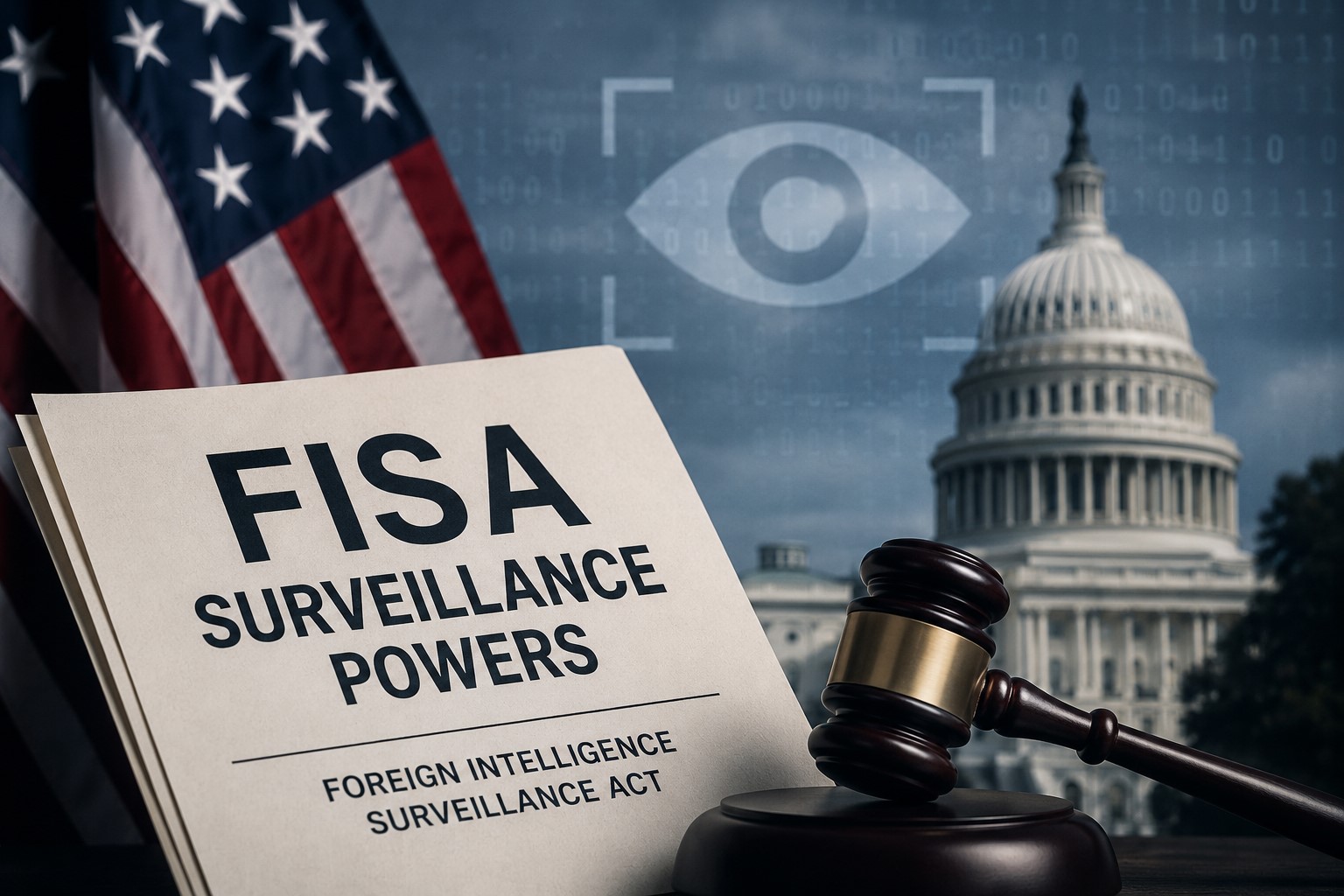
FISA Surveillance Powers Near Expiration: What the Debate Means for National Security and Privacy
A key US surveillance authority widely used by intelligence agencies to track foreign threats has expired after Congress failed to agree on a temporary extension before the deadline.
Section 702 of the Foreign Intelligence Surveillance Act (FISA), one of the government's most powerful intelligence-gathering tools, lapsed after lawmakers left Washington without passing a renewal measure. The program allows US intelligence agencies to collect communications from foreign targets located outside the United States. However, critics have long argued that the surveillance can also capture communications involving Americans, raising concerns about privacy and civil liberties.
The expiration follows months of difficult negotiations on Capitol Hill. Lawmakers had previously approved a short-term extension while debating a longer-term solution, but efforts to secure another temporary renewal ultimately collapsed amid growing political tensions.
Democratic support for an extension weakened after President Donald Trump selected Bill Pulte, who lacks a traditional intelligence background, to serve as acting Director of National Intelligence. Some lawmakers argued that leadership concerns complicated efforts to reach a bipartisan agreement on the surveillance program's future.
National security officials have repeatedly warned that allowing Section 702 to expire could create intelligence gaps at a time of heightened global instability. The program has been credited with helping authorities prevent terrorist attacks, combat ransomware threats, track foreign espionage activities, and disrupt international drug trafficking networks.
Supporters of the law argue that it remains one of the most effective tools available to US intelligence agencies. Former FBI special agent and Republican Representative Brian Fitzpatrick said the lapse could weaken America's security posture and reduce the government's ability to identify emerging threats.
Civil liberties advocates, however, continue to push for reforms. Privacy groups from across the political spectrum argue that the warrantless surveillance authority can result in Americans' communications being collected when they interact with foreign targets. They have called for stronger oversight and additional safeguards before any long-term reauthorization is approved.
Under Section 702, the government can require telecommunications companies, internet service providers, and email platforms to provide access to communications linked to approved foreign intelligence targets. Intelligence officials say information gathered through the program contributes significantly to daily national security assessments and presidential intelligence briefings.

Comments (0)
Sign in to join the conversation.