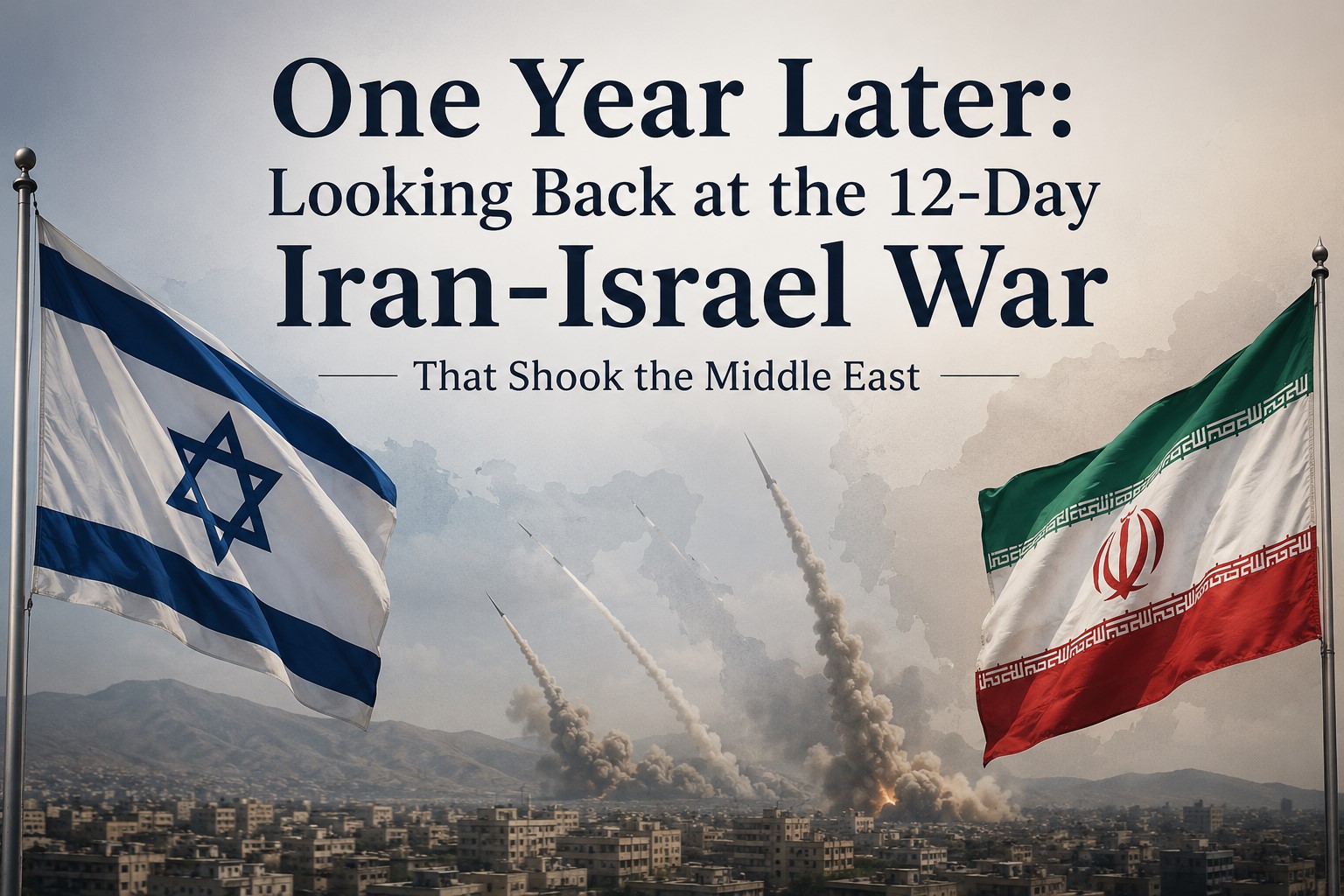
One Year Later: Looking Back at the 12-Day Iran-Israel War That Shook the Middle East
Saturday marks one year since the start of the 12-day conflict between Iran and Israel, a brief but consequential war that reshaped the Middle East and set the stage for broader regional tensions in the months that followed.
The conflict erupted on June 13, 2025, when Israel launched a large-scale operation targeting key elements of Iran’s nuclear and missile programs. The unprecedented strikes hit strategic facilities and eliminated several senior Iranian military and scientific figures, marking one of the most significant direct confrontations between the two longtime adversaries.
Dubbed “Operation Rising Lion,” the campaign was designed to disrupt what Israeli officials described as Iran’s accelerating efforts to develop nuclear weapons capabilities. The attacks triggered a swift Iranian response, leading to nearly two weeks of missile exchanges and military escalation across the region.
While the United States was not involved in the opening phase of the conflict, Washington entered the war during its second week. Under President Donald Trump, U.S. forces carried out strikes on several Iranian nuclear facilities, further increasing international concerns about a wider regional conflict.
Behind the scenes, diplomatic efforts intensified as global leaders sought to prevent further escalation. Qatar played a central mediating role, facilitating negotiations between the two sides. Those efforts culminated in a ceasefire agreement that took effect on June 24, ending the 12-day war.
The conflict left a lasting impact on Iran’s military and strategic capabilities. Analysts say Tehran suffered significant losses, including major damage to its air defense systems, missile infrastructure, military leadership, and nuclear facilities. Several leading nuclear scientists were also killed during the campaign.
Although the fighting ended within days, its consequences continue to shape regional security dynamics one year later. The war altered military calculations across the Middle East, intensified geopolitical rivalries, and remains a defining moment in the ongoing struggle for influence and stability in the region.

Comments (0)
Sign in to join the conversation.