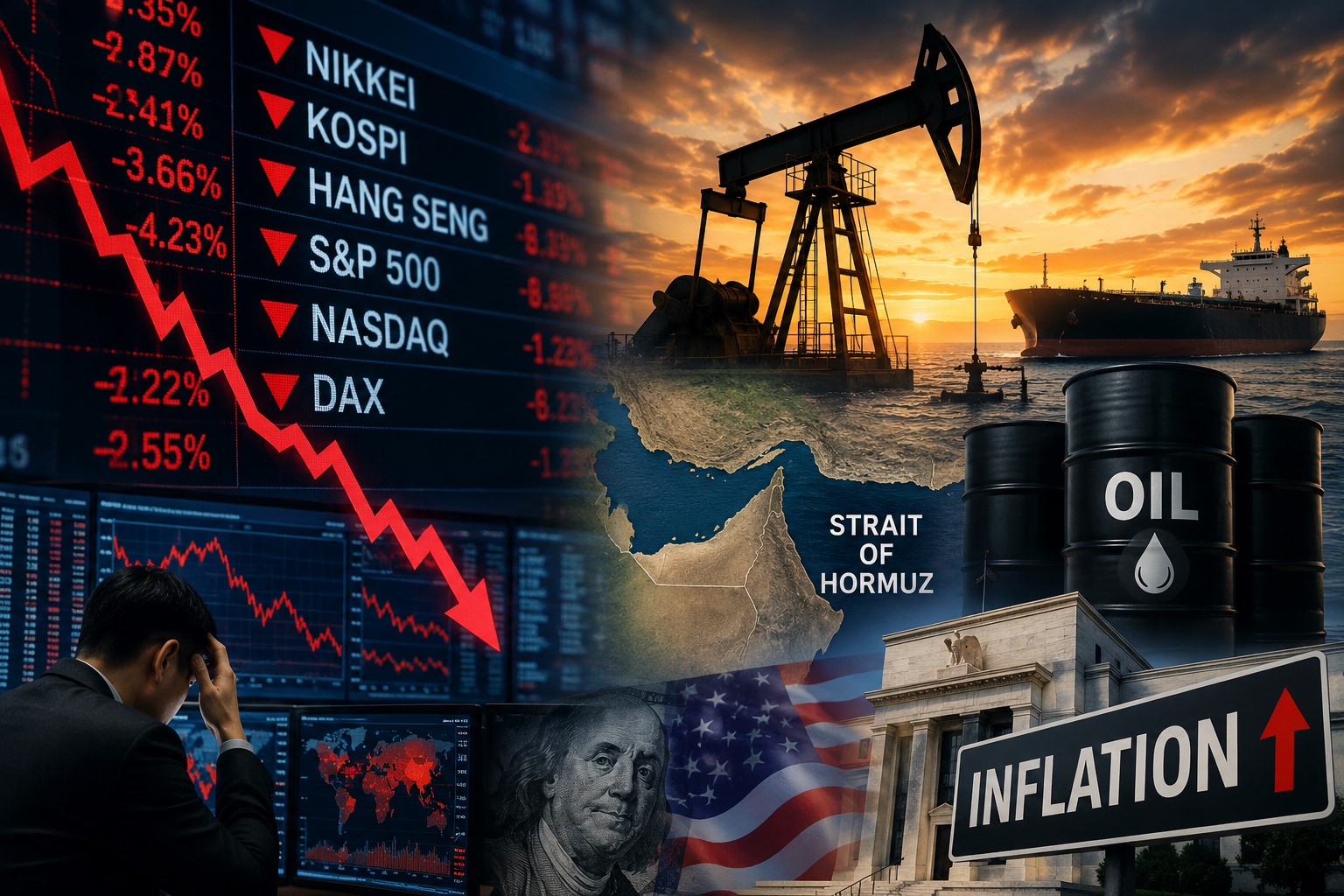
Global financial markets opened the week under pressure as escalating conflict in the Gulf triggered a sharp rise in oil prices and renewed fears of global inflation. Investor sentiment weakened after Iran claimed it had closed the strategically important Strait of Hormuz, a critical route for global oil shipments, increasing concerns about potential disruptions to energy supplies.
Brent crude climbed more than 4% to above $79 a barrel, while U.S. crude also posted strong gains as traders reacted to the heightened geopolitical risk. The surge in oil prices pushed bond yields higher and strengthened the U.S. dollar as investors reassessed expectations for interest rates and inflation.
Stock markets across Asia recorded steep losses. Japan's Nikkei fell more than 2%, while South Korea's KOSPI suffered one of the region's biggest declines as technology and semiconductor shares came under heavy selling pressure. Futures for major U.S. and European indexes also pointed to weaker openings, reflecting growing caution among investors.
Markets are now turning their attention to upcoming U.S. inflation data and the start of the corporate earnings season. Major banks are scheduled to report first, followed by several leading technology companies, with investors closely watching whether strong artificial intelligence-related earnings can offset broader market uncertainty.
Analysts say continued tensions in the Gulf could keep energy prices elevated, adding pressure on central banks already balancing inflation risks with slowing economic growth. If oil prices remain high, businesses and consumers worldwide could face increased costs, potentially weighing on economic activity in the months ahead.


Comments (0)
Sign in to join the conversation.