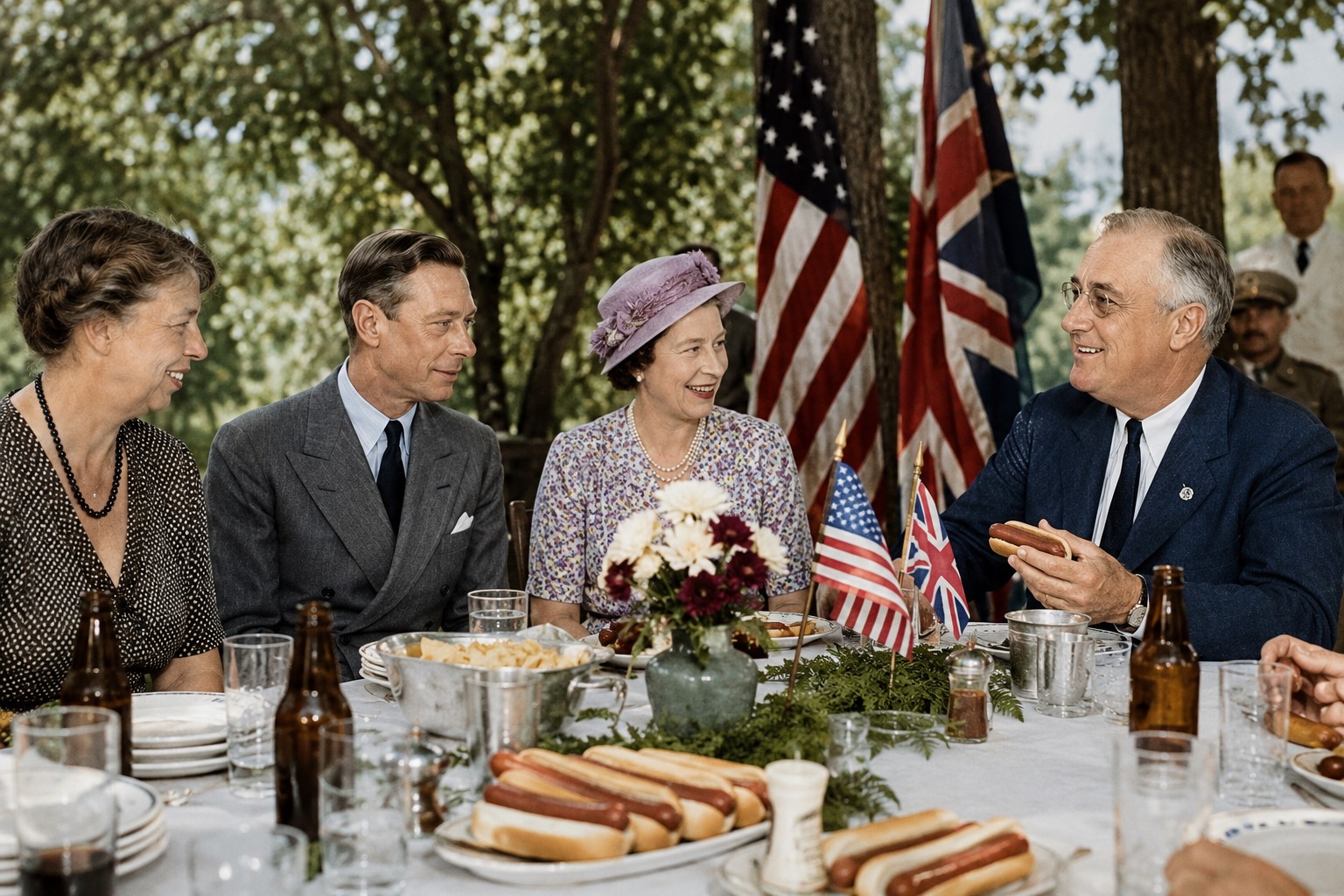
In June 1939, as Europe edged closer to World War II, a seemingly ordinary picnic at U.S. President Franklin D. Roosevelt’s Hyde Park estate became one of the most significant diplomatic moments in modern history. The gathering, which welcomed King George VI and Queen Elizabeth, marked the first official visit by a reigning British monarch to the United States and helped lay the foundation for the enduring US-UK "special relationship."
At the time, Nazi Germany was rapidly expanding across Europe, and Roosevelt believed Britain would soon face war with Adolf Hitler. While the U.S. public remained largely opposed to involvement in another European conflict, the president sought a way to strengthen public support for Britain without directly entering the debate over military intervention.
Rather than organizing a formal state event, Roosevelt invited the royal couple to his country home in Hyde Park, New York. The informal visit featured a relaxed outdoor picnic where guests enjoyed hot dogs, beer and casual conversation—an intentional effort to present the British monarchy as approachable and relatable to the American public.
The visit also provided an opportunity for Roosevelt and King George VI to discuss the growing crisis in Europe. Historians believe their private conversations helped establish mutual trust and strengthened diplomatic ties at a critical moment in world history. The king, who had unexpectedly ascended the throne following his brother's abdication in 1936, reportedly left the meeting with renewed confidence in both his leadership and Britain's relationship with the United States.
First Lady Eleanor Roosevelt also played an important role in welcoming the royal visitors, helping create a warm and informal atmosphere that contrasted with the rigid traditions often associated with royal engagements. The relaxed setting, including shared meals and personal conversations, helped break down barriers between the two nations.
Although the visit did not immediately change U.S. policy, it improved public perceptions of Britain and its monarchy. Over the following years, cooperation between Washington and London deepened, culminating in American support through the Lend-Lease program and, eventually, the U.S. entry into World War II after the attack on Pearl Harbor.
The historic 1939 meeting is once again attracting attention through Springwood, a new stage play inspired by the real-life events at Roosevelt's Hyde Park estate. The production explores the personal relationships, political tensions and diplomatic significance of the weekend that helped shape the future alliance between the United States and the United Kingdom.
More than eight decades later, historians continue to view the Hyde Park picnic as a landmark example of diplomacy through personal connection—an event that strengthened trust between two leaders and helped establish one of the world's most enduring international partnerships.
Comments (0)
Sign in to join the conversation.