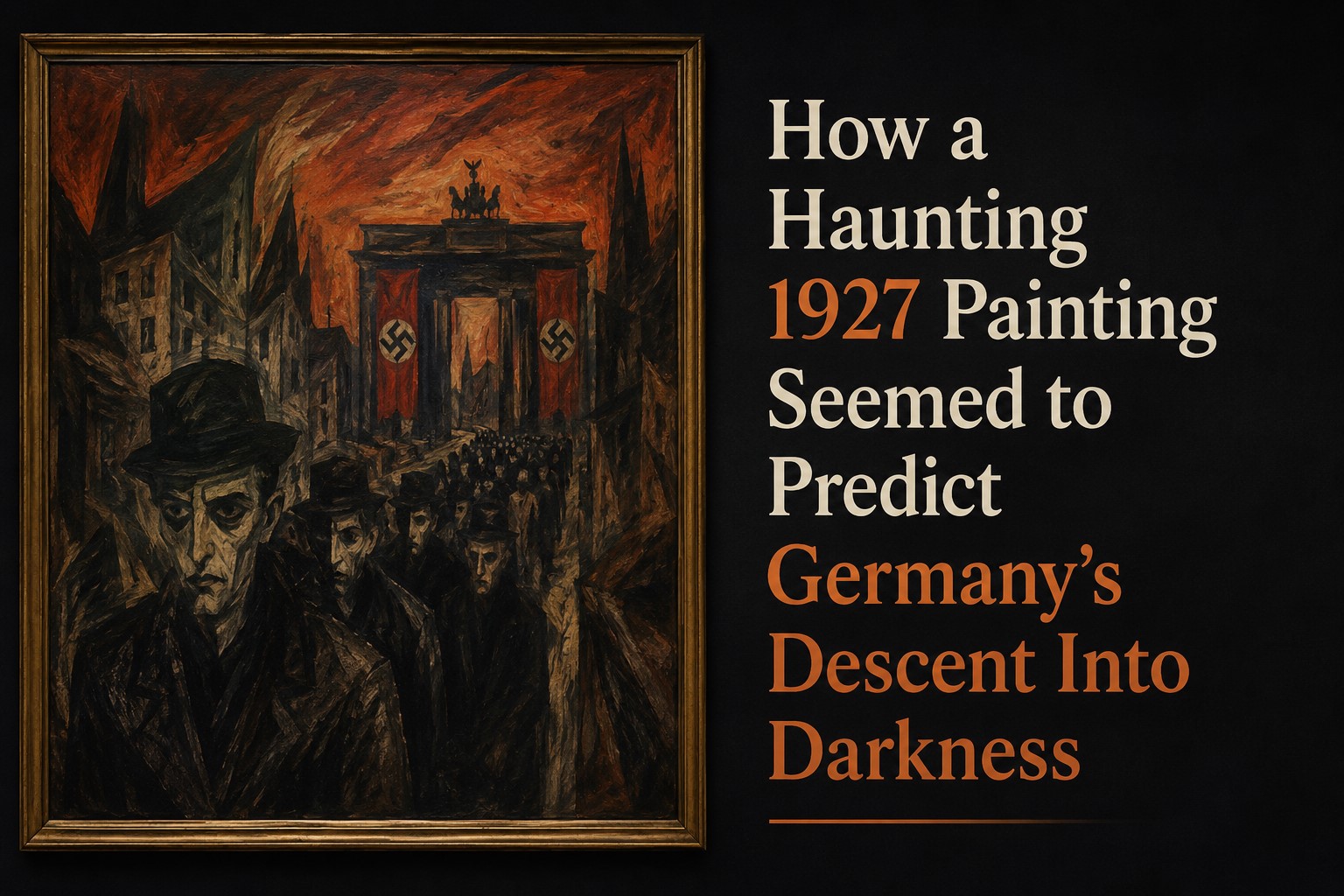
How a Haunting 1927 Painting Seemed to Predict Germany’s Descent Into Darkness
Nearly a century after its creation, Variety Show (1927) by German artist Max Beckmann continues to fascinate viewers with its unsettling portrayal of a society on the brink of upheaval. What initially appears to be a scene from the vibrant cabaret culture of Weimar Germany reveals deeper themes of instability, uncertainty, and social decay that many now see as eerily prophetic.
The painting depicts a bizarre theatrical spectacle. A man dressed in a red military coat lies motionless on the floor while another carefully walks a tightrope above him. Nearby, a mysterious figure conceals their face beneath a blue cloth, and a seated man appears detached from the unfolding drama. In the background, an unusual dog-like creature silently observes the scene.
At first glance, the artwork reflects the flourishing nightlife and entertainment culture that defined Germany's Weimar Republic during the 1920s. Cabaret performances became symbols of artistic freedom, political satire, and social experimentation during a period marked by rapid cultural change.
Yet beneath the surface, the atmosphere feels far from celebratory. Art historians argue that Beckmann's composition presents a troubling vision of a society losing its balance. The tightrope walker symbolizes the fragile political situation of the era, while the fallen figure suggests weakness, vulnerability, or a loss of power.
Created during the turbulent years between World War I and the rise of Nazi Germany, Variety Show captured a nation wrestling with instability. Although the Weimar Republic was known for its cultural innovation and modernization, it was also plagued by political violence, economic uncertainty, and growing extremist movements.
Historians note that many Germans recognized the fragility of the democratic system long before its collapse. High-profile assassinations, government instability, and the gradual rise of the Nazi Party created an atmosphere of unease beneath the era's outward vibrancy.
With the benefit of hindsight, Beckmann's painting can be interpreted as a symbolic warning. The theatrical setting suggests a society performing for itself while deeper problems remain ignored. The sense of disorder and detachment reflected in the artwork mirrors the tensions that would eventually lead to one of the darkest chapters in German history.
Beckmann's own experiences shaped his pessimistic worldview. After serving as a medical orderly during World War I, he suffered a mental breakdown and developed a more critical and cynical artistic perspective. His later works frequently explored themes of human suffering, social fragmentation, and moral ambiguity.
Comments (0)
Sign in to join the conversation.