David Hockney’s 1967 Masterpiece Takes on New Meaning Following the Artist’s Death
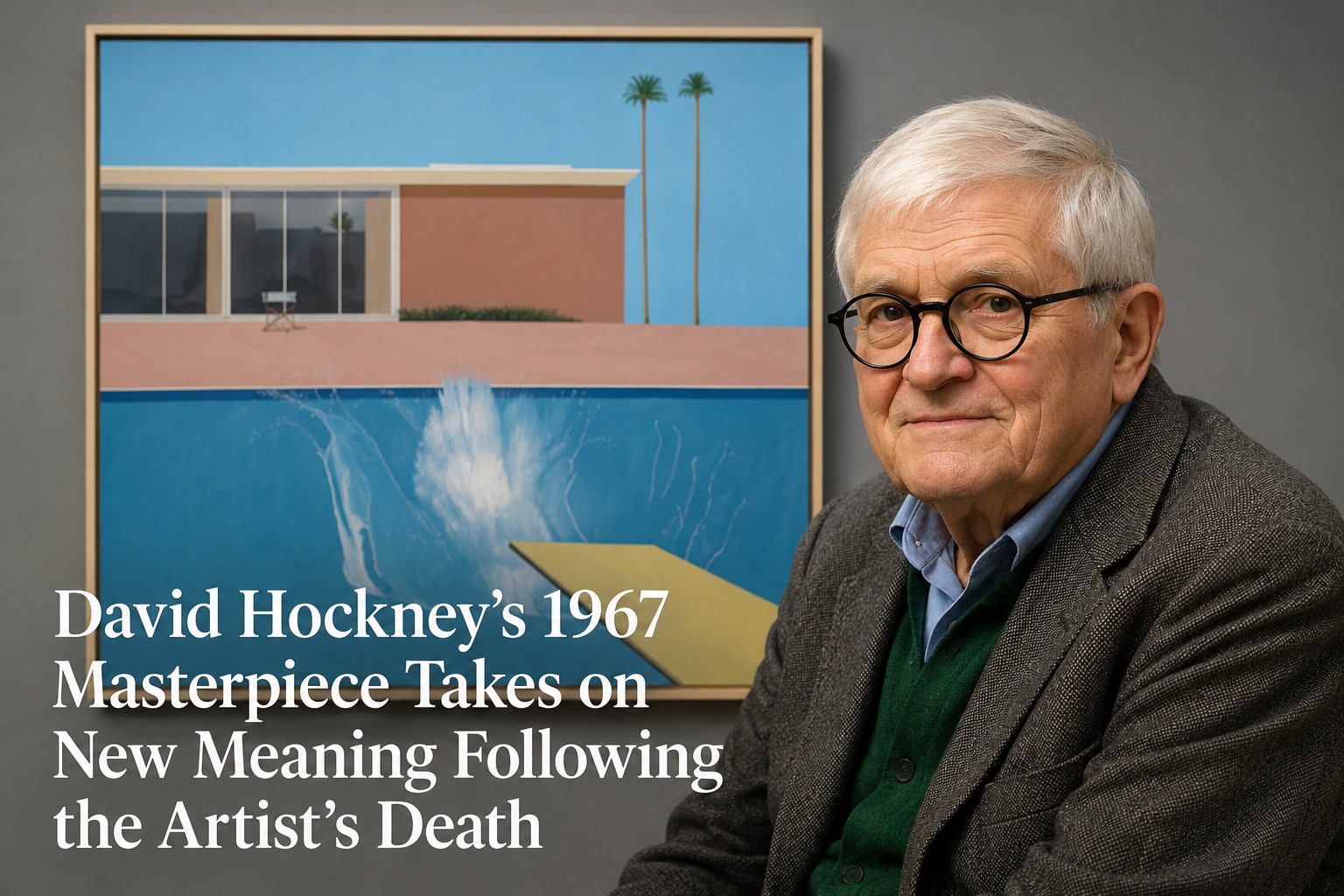
The death of celebrated British artist David Hockney has prompted renewed reflection on one of his most iconic works, A Bigger Splash, a 1967 painting that continues to captivate audiences nearly six decades after its creation.
Created three years after Hockney relocated from London to Los Angeles, A Bigger Splash has long been admired for its vivid depiction of a sunlit California swimming pool interrupted by the dramatic burst of water from an unseen diver. The image, frozen at a fleeting moment in time, has become a symbol of freedom, self-expression, and the optimism associated with Hockney’s early years in California.
Yet beneath its seemingly simple composition lies a complex blend of artistic influences that shaped the painter’s vision. While the work evokes the spontaneity and light-filled atmosphere associated with Impressionist painting, its roots stretch much further back in art history.
A pivotal influence came from Hockney’s visit to Egypt in 1963, where he studied ancient tomb paintings and reliefs. Fascinated by their flat perspectives, bold outlines, and timeless sense of order, he incorporated many of these visual qualities into his evolving style. The experience also deepened his appreciation for the calm geometry and clarity found in the works of early Renaissance masters such as Masaccio, Fra Angelico, and Piero della Francesca.
After settling in Los Angeles, Hockney combined these historical inspirations with the vibrant visual language of American Pop Art. Drawing from the bold graphic style popularized by artists like Andy Warhol and Roy Lichtenstein, he developed a unique artistic approach that merged ancient traditions with contemporary culture.
The origins of A Bigger Splash were equally unconventional. The painting was inspired by a photograph Hockney discovered in a swimming pool construction manual. The image captured a splash created by an unseen diver, a brief event that fascinated the artist because of its contrast between permanence and transience. He transformed the photograph into a carefully composed painting, pairing the dramatic splash with the clean architectural lines and bright California landscape that would become hallmarks of his work.
Today, following Hockney’s passing, many viewers see the painting through a new lens. The splash—once interpreted as a celebration of movement and possibility—now carries additional emotional resonance. It serves as a reminder of how art can preserve a fleeting moment long after the individual who created it is gone.

Comments (0)
Sign in to join the conversation.