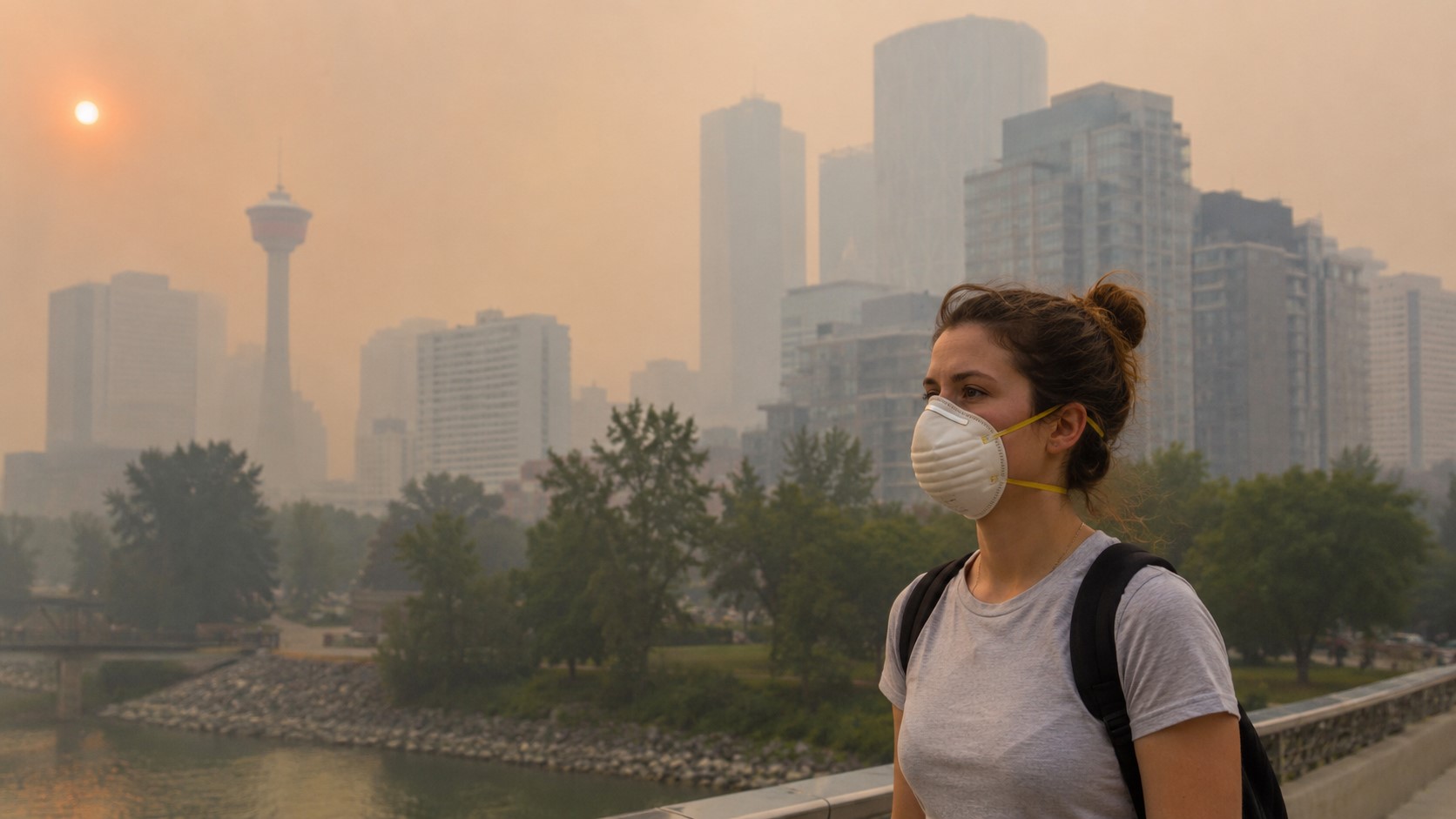
How to Breathe Easier When Smoke Fills the Air
Millions of people across the United States and Canada are experiencing poor air quality as smoke from widespread wildfires drifts across the region. Health officials warn that prolonged exposure to wildfire smoke can increase the risk of respiratory and cardiovascular problems, making it essential to take precautions until air conditions improve.
Wildfire smoke contains a complex mixture of gases and fine particulate matter known as PM2.5. These microscopic particles are small enough to penetrate deep into the lungs and even enter the bloodstream, potentially triggering asthma attacks, worsening chronic lung conditions, and increasing the risk of heart disease.
Check Air Quality Before Going Outside
Experts recommend checking local air quality before making outdoor plans. Air quality indexes provide real-time information about pollution levels and can help determine whether it is safe to spend time outside.
When air quality reaches unhealthy levels, individuals should avoid strenuous outdoor activities and remain indoors whenever possible. Children, older adults, pregnant women, and people with asthma or heart disease should take extra precautions, although healthy individuals can also experience irritation from smoke exposure.
Keep Indoor Air Clean
Staying indoors is most effective when indoor air remains clean. Close all windows and doors to prevent smoke from entering your home, and use air conditioning if available. Ensure that window-mounted air conditioners are properly sealed to reduce outdoor air leaks.
Portable air purifiers equipped with HEPA filters can significantly reduce airborne smoke particles. Homeowners with central HVAC systems should also use high-quality air filters with an appropriate MERV rating, replacing them as recommended to maintain clean indoor air.
Improve Ventilation Safely
While ventilation is important, avoid bringing smoky outdoor air inside. During periods of poor air quality, run your home's air conditioning on recirculation mode if available. Creating a designated "clean air room" with a HEPA purifier can provide additional protection for family members.
Reduce Smoke Exposure
Doctors stress that minimizing exposure remains the most effective way to protect your health. If you must go outdoors during smoky conditions, keep trips brief, avoid vigorous exercise, and monitor for symptoms such as coughing, wheezing, shortness of breath, or chest discomfort.
As wildfire seasons become longer and more intense, preparing your home with air filtration systems and staying informed about changing air quality conditions can help reduce health risks and make breathing easier during smoke events.



Comments (0)
Sign in to join the conversation.