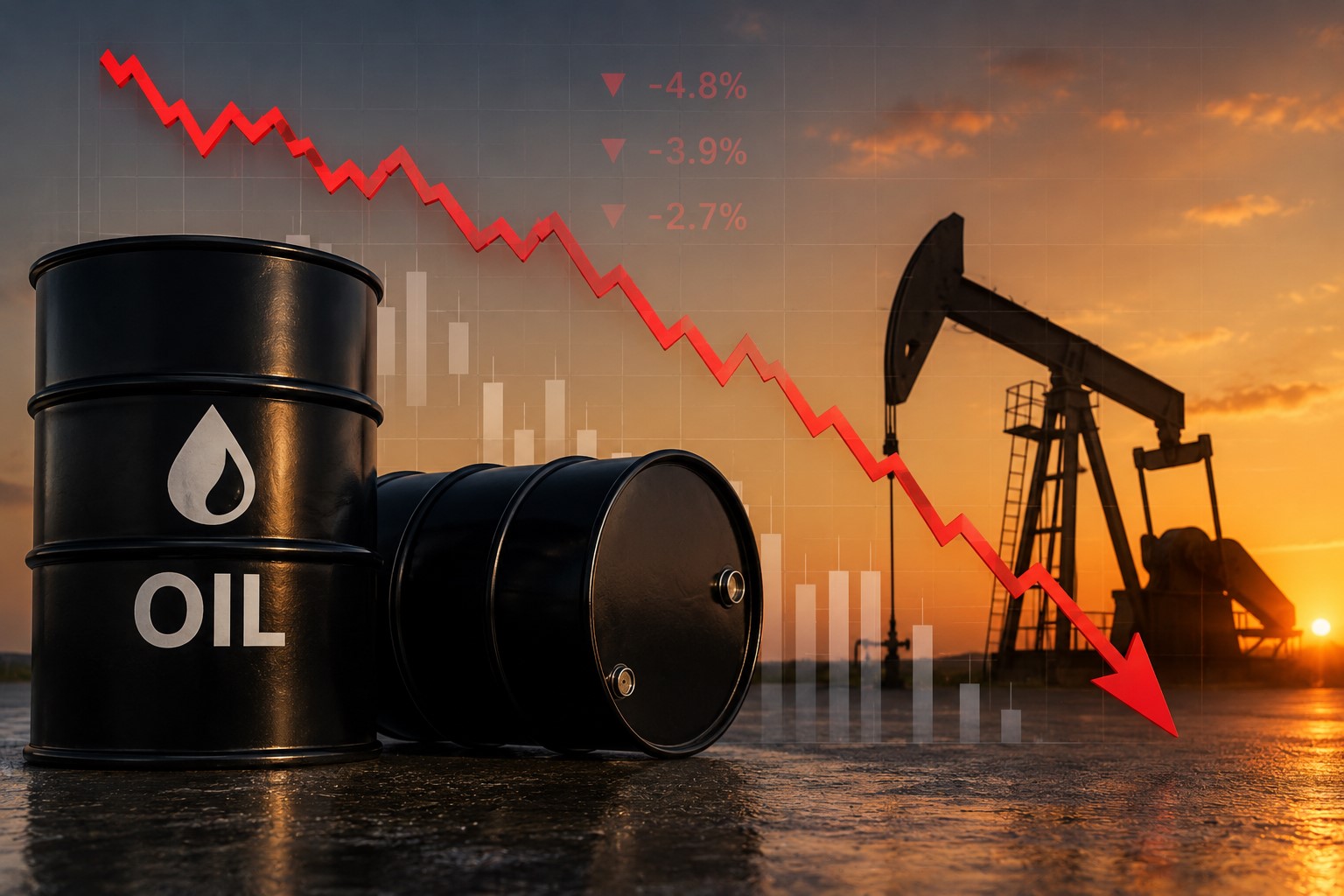
Oil Prices Slide as U.S.-Iran Agreement Eases Supply Concerns
Global oil prices fell sharply on Sunday after President Donald Trump announced that the United States and Iran had reached an agreement that could pave the way for the removal of restrictions on Iranian shipping and the reopening of key energy trade routes.
Brent crude dropped nearly 4% to around $84 per barrel, while U.S. West Texas Intermediate (WTI) crude fell almost 5% to approximately $81 per barrel. If prices remain at those levels, crude oil would reach its lowest point since early March, shortly after the conflict in the Middle East began.
The decline follows growing optimism among investors that tensions in the region may be easing. Oil prices had already slipped below $90 per barrel on Friday as markets anticipated progress toward a diplomatic breakthrough between Washington and Tehran.
President Trump said on social media that an agreement with Iran had been completed, while Iranian officials confirmed that a memorandum of understanding had been finalized and is expected to be formally signed later this week in Switzerland.
A key element of the agreement involves reopening maritime access for Iranian trade and restoring navigation through the Strait of Hormuz, one of the world's most important oil transit routes. Trump also indicated that efforts would begin to clear mines from the strategic waterway, allowing commercial vessels to move more freely.
Despite the market's positive reaction, analysts caution that restoring normal oil flows will take time. Shipping traffic must resume safely, energy infrastructure damaged during the conflict needs repairs, and oil production across the Middle East must gradually ramp back up after months of disruption.
Industry experts note that many oil fields were either shut down or operating at reduced capacity during the conflict. Even after reopening, production may take weeks to recover and could remain below pre-war levels for an extended period.
Concerns also remain about global energy reserves. Strategic stockpiles that were used to stabilize supplies during the conflict will eventually need to be replenished, which could support higher prices later in the year.
Some analysts warn that oil markets remain vulnerable to future price spikes if supply disruptions continue or demand rebounds more quickly than expected. While crude prices have fallen on hopes of a lasting agreement, uncertainty surrounding implementation and regional stability continues to influence market sentiment.
The agreement also boosted investor confidence on Wall Street. U.S. stock futures moved higher, with Dow Jones futures rising 0.6%, while futures tied to the S&P 500 and Nasdaq each gained more than 0.7%.
For now, financial markets appear encouraged by the prospect of reduced geopolitical tensions and improved energy supplies. However, traders and industry leaders will be closely watching developments in the coming weeks to determine whether the agreement delivers a sustained recovery in global oil markets.


Comments (0)
Sign in to join the conversation.