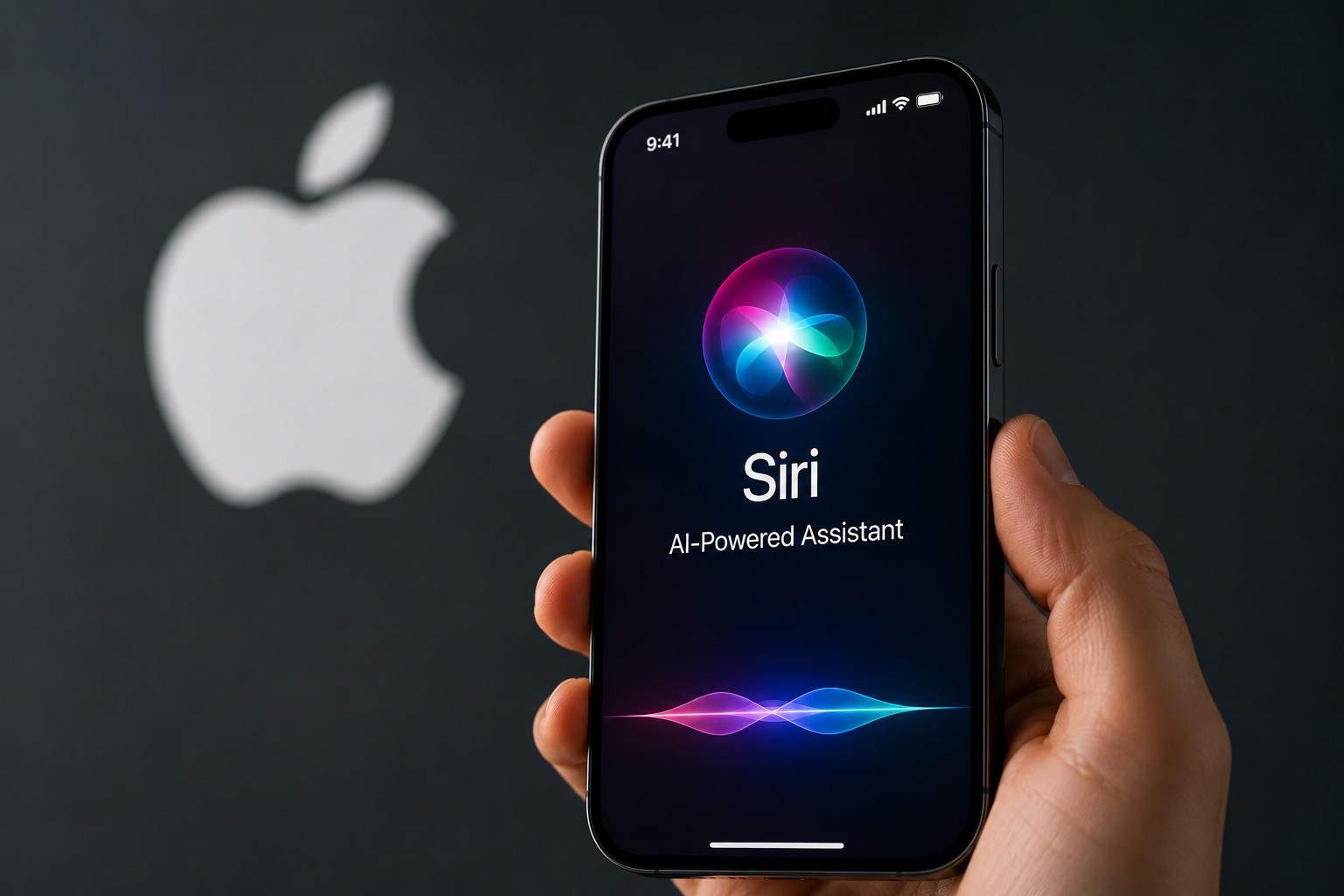
Apple Rolls Out Major Siri Upgrade, Shifting Focus to Real-World Performance
Apple has unveiled its most ambitious Siri overhaul in years, introducing a new AI-powered version of the digital assistant that the company hopes will strengthen its position in the rapidly evolving artificial intelligence market.
Announced during Apple's latest product event, the upgraded Siri is designed to move beyond basic voice commands and become a more personalized and capable assistant. The new system will be able to interact with apps, understand content displayed on an iPhone’s screen, and use personal context to provide more relevant responses.
The launch comes as Apple faces growing pressure from investors and consumers to demonstrate that it can compete with leading AI platforms such as ChatGPT and Google Gemini. While Apple has built a reputation for turning emerging technologies into mainstream products, analysts say the company must now prove that its AI investments can generate meaningful revenue and drive demand for future devices.
Industry observers remain divided on whether Apple’s latest AI push will be enough to accelerate iPhone upgrade cycles. Although the company continues to generate strong revenue from smartphone sales, many analysts believe consumers are still prioritizing traditional hardware improvements such as battery life and performance over AI capabilities.
The new Siri aims to make artificial intelligence more useful in everyday life. Rather than focusing on workplace productivity, Apple is positioning the assistant as a tool for managing daily tasks, finding information, organizing communications, and navigating personal content across devices.
During demonstrations, Apple showed Siri retrieving information from text conversations, answering questions based on recent messages, and understanding what users are viewing on their screens. The assistant can also perform more advanced actions across apps, making it a central part of the iPhone experience.
Some of Siri’s most advanced features, including enhanced voice interactions and improved speech recognition, will only be available on Apple's newest premium iPhone models. Additional AI-powered services may also require subscriptions through Apple’s expanding ecosystem, including certain iCloud+ offerings.
Analysts believe these premium features could create new opportunities for Apple to generate revenue from both hardware sales and subscription services. However, they caution that widespread adoption will depend on how effectively the company can demonstrate real-world value to consumers.
Another key advantage for Apple could be customer retention. By integrating Siri more deeply into users’ personal data, communications, and daily routines, the company may make it more difficult for customers to switch to competing platforms.
Despite the excitement surrounding the announcement, experts say Apple’s AI journey is still in its early stages. The upgraded Siri represents a significant step forward, but the company’s long-term success will depend on its ability to deliver reliable, useful, and compelling AI experiences that resonate with everyday users.
As the AI race intensifies across the technology industry, Apple is betting that a smarter, more personalized Siri can become a cornerstone of its next generation of products and services.



Comments (0)
Sign in to join the conversation.