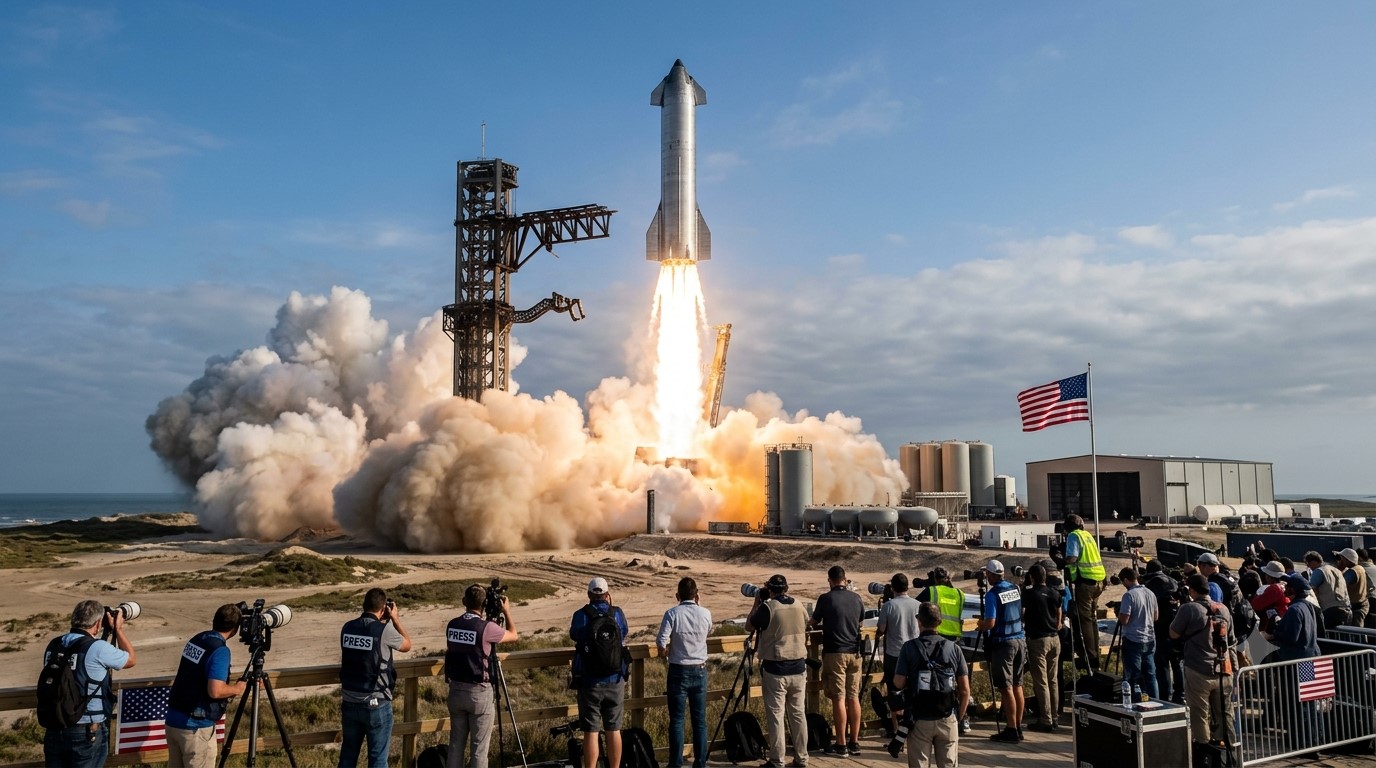
BOCA CHICA, Texas — SpaceX has completed another major test of its Starship rocket, launching the vehicle from its Starbase facility in Texas on July 24 in a mission that demonstrated improvements to the spacecraft while testing upgraded satellite technology.
The approximately hour-long flight successfully deployed 20 upgraded Starlink V3 satellites into suborbital space. The satellites briefly connected with SpaceX's existing Starlink network before being intentionally destroyed during atmospheric reentry. The upgraded spacecraft are designed to provide greater bandwidth and faster internet services.
One of the most closely watched aspects of the mission was Starship's return through Earth's atmosphere. Reuters reported that the vehicle's heat shield appeared to suffer minimal damage, an encouraging development for SpaceX's long-term goal of making large rockets routinely reusable.
The mission was not completely successful. The Super Heavy booster experienced problems during its descent, with five engines failing to reignite properly. The booster consequently made a harder-than-planned impact in the Gulf of Mexico.
The test nevertheless represents an important step in SpaceX's wider plans for Starlink expansion, satellite-to-mobile connectivity, artificial-intelligence infrastructure and lunar exploration. NASA is also preparing for future Artemis missions involving commercial lunar lander technology, with SpaceX developing a Starship-based human landing system.
The latest flight keeps the United States at the center of an increasingly competitive commercial space industry, with reusable rockets and large-scale satellite networks becoming critical technologies for future communications, exploration and national space capabilities.



Comments (0)
Sign in to join the conversation.