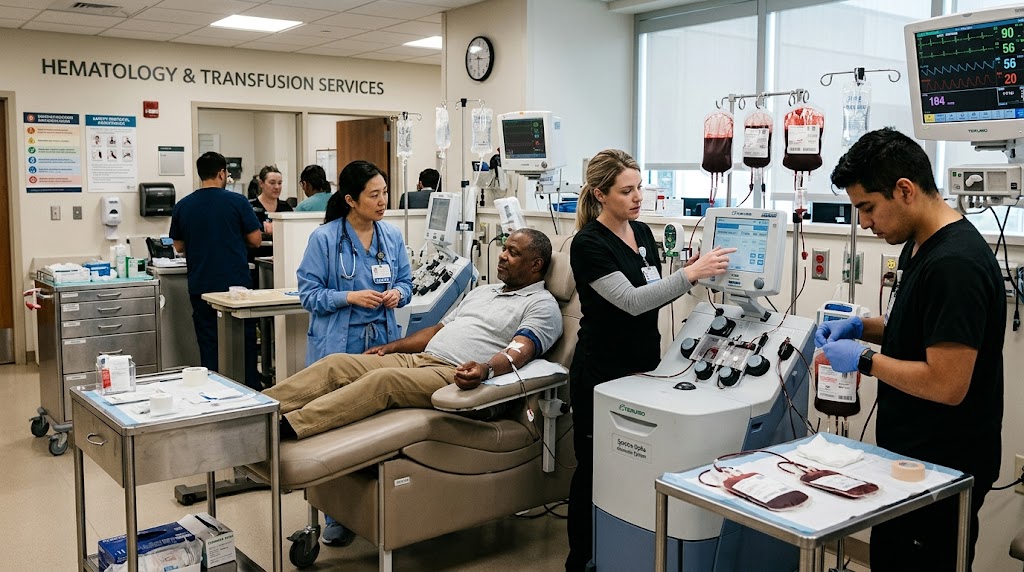
Fewer than 3% of U.S. patients with sickle cell disease are receiving red blood cell exchange therapy, despite widespread access to the technology among healthcare providers, according to new research.
The procedure removes a patient's damaged red blood cells and replaces them with healthy donor red blood cells. Researchers say it can be an important treatment option for some people with sickle cell disease, an inherited blood disorder that can restrict blood flow and cause serious complications.
A survey of 100 U.S. healthcare providers found that 91% reported having access to red blood cell exchange, but fewer than 3% of their sickle cell patients were recorded as receiving the treatment. Researchers identified several barriers, including coordination between medical departments, limited supplies of donated blood and limited familiarity with the procedure.
Insurance coverage was also identified as a concern for patients. Researchers said access can vary depending on where patients live and whether specialized sickle cell care is available in their communities.
The findings highlight the gap between availability of specialized sickle cell treatment and actual patient access in the United States. Researchers said expanding comprehensive sickle cell centers could help connect patients with hematology, transfusion and other specialized services.

Comments (0)
Sign in to join the conversation.