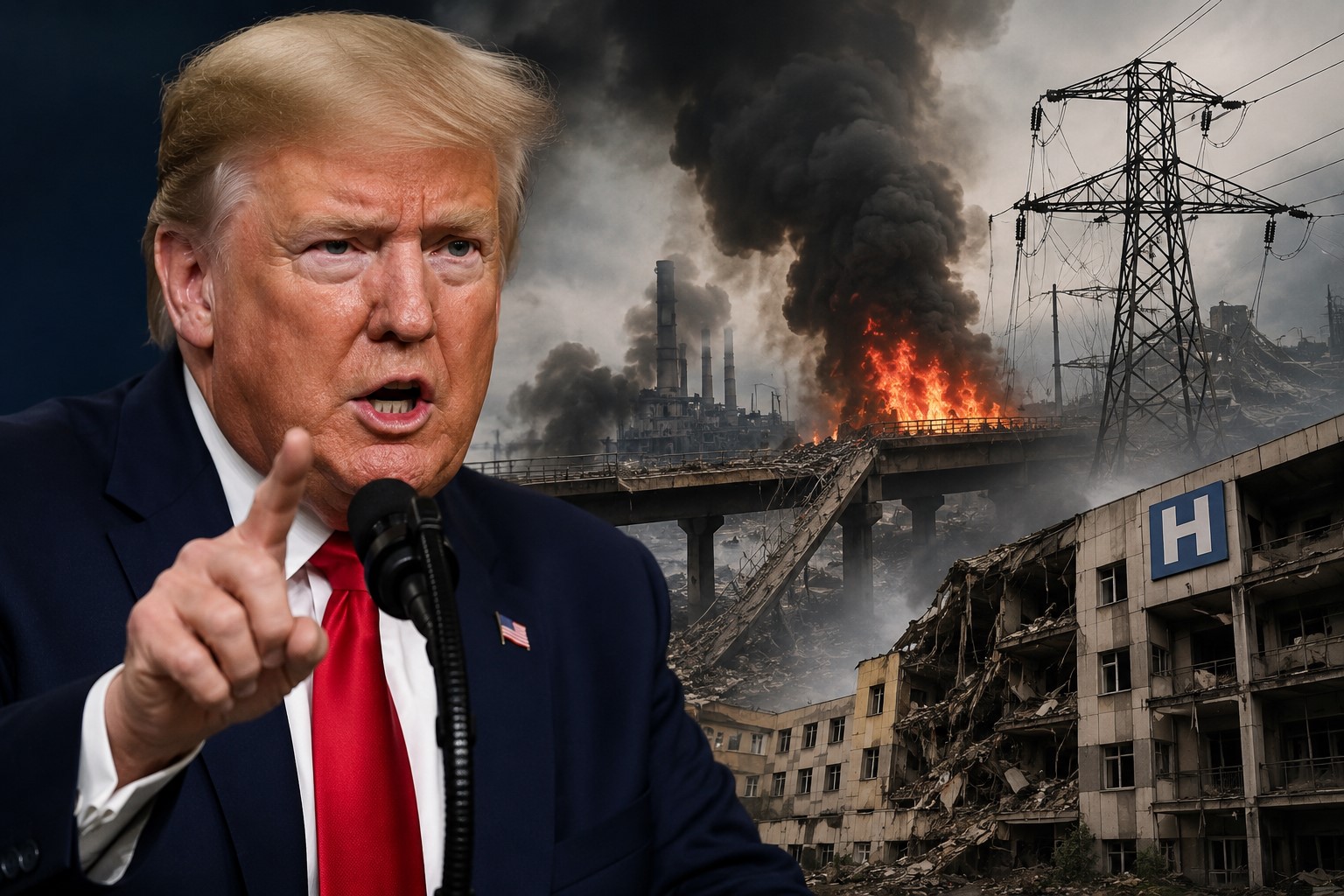
Former U.S. President Donald Trump has reignited controversy after renewing threats that involve targeting civilian infrastructure, prompting widespread debate among political leaders, security experts, and legal analysts.
The remarks have drawn criticism from opponents, who argue that any rhetoric suggesting attacks on civilian facilities could escalate tensions and undermine established international norms. Human rights advocates have also expressed concern, emphasizing that civilian infrastructure—including power grids, hospitals, transportation systems, and water facilities—is protected under international humanitarian law during armed conflicts.
Supporters of Trump contend that his comments should be viewed within the broader context of national security and strategic deterrence, arguing that they reflect a tough stance rather than an indication of immediate policy action. However, critics say such statements risk increasing geopolitical uncertainty and could have diplomatic consequences.
The renewed comments come at a time of heightened global tensions, with conflicts in several regions placing renewed focus on the protection of civilians and critical infrastructure. International organizations have repeatedly called on governments and political leaders to avoid actions or rhetoric that could endanger civilian populations or essential public services.
Analysts say the latest remarks are likely to fuel political debate both in the United States and abroad, particularly as foreign policy and national security continue to play a prominent role in public discourse. Lawmakers from both major parties are expected to weigh in as discussions over America's international role and military strategy continue.
While no official policy changes have been announced, Trump's comments have once again placed his foreign policy approach under scrutiny, with observers closely watching for further developments and reactions from U.S. allies and international partners.
Comments (0)
Sign in to join the conversation.