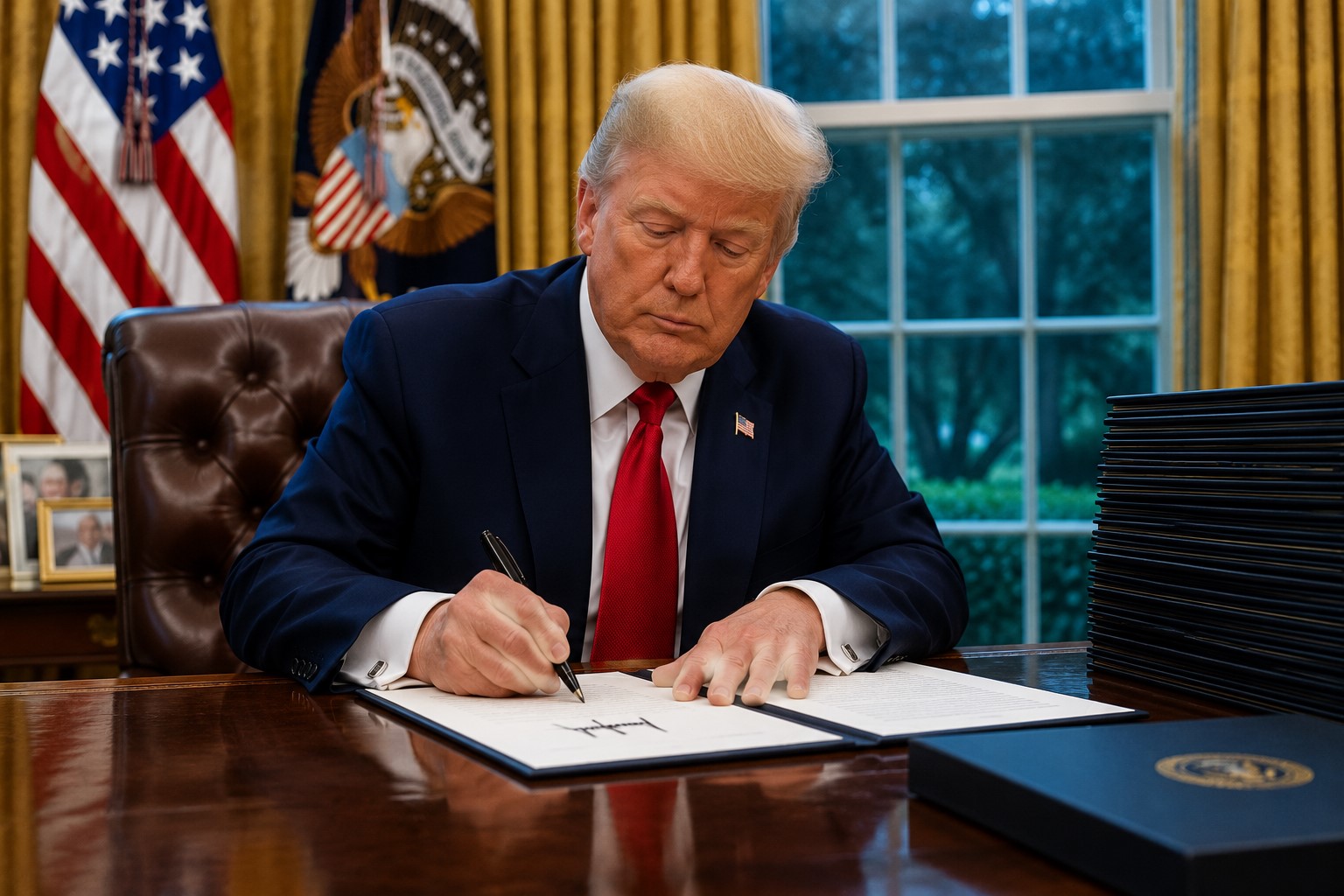
Washington, D.C.: President Donald Trump signed a major piece of legislation into law without hosting the traditional White House bill-signing ceremony, a move that departs from decades of presidential practice.
Public bill-signing ceremonies have long served as symbolic events where presidents celebrate legislative achievements alongside members of Congress, cabinet officials, and key supporters. The events often provide lawmakers from both parties an opportunity to highlight bipartisan cooperation and mark significant policy milestones.
Instead, the White House quietly finalized the legislation, issuing confirmation that the bill had been signed into law without the customary public event. The decision drew attention because the measure is considered one of the most significant pieces of legislation approved by Congress during the current session.
Political observers noted that the absence of a formal ceremony denied lawmakers the traditional public recognition that typically accompanies major legislative victories. Such events have historically been used to underscore cooperation between the executive and legislative branches while showcasing the administration's policy agenda.
The White House has not provided a detailed explanation for forgoing the ceremony. Supporters argue that the administration chose to focus on implementing the legislation rather than staging a ceremonial event, while critics say the decision breaks with an important democratic tradition that publicly acknowledges Congress' role in the legislative process.
The legislation itself is expected to have wide-ranging implications, and federal agencies will now begin implementing its provisions in the coming months. Despite the lack of a public signing event, the bill officially became law once it received the president's signature.
Comments (0)
Sign in to join the conversation.