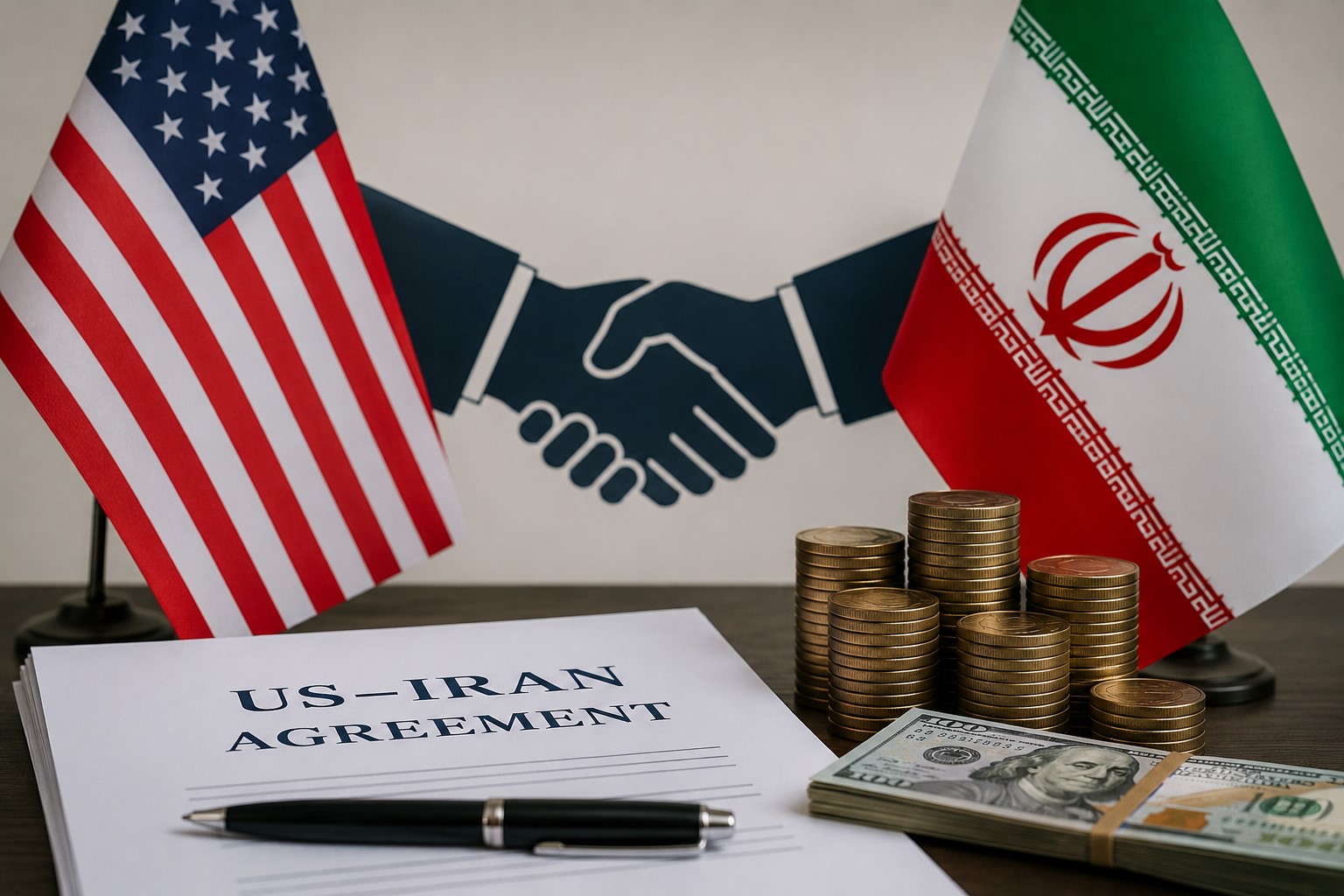
US-Iran Peace Deal Draft Offers Major Economic Incentives in Exchange for Nuclear Commitments
Iran is poised to receive significant economic benefits under a proposed peace agreement with the United States, according to a draft memorandum that outlines broad financial incentives in exchange for Tehran's commitment to halt efforts toward acquiring nuclear weapons and ensure free navigation through the Strait of Hormuz.
The agreement, expected to be formally signed in Switzerland on June 19, would immediately allow Iran to resume certain oil exports through U.S. Treasury waivers and could pave the way for access to billions of dollars in frozen assets. The draft also proposes a long-term economic development framework backed by at least $300 billion in financing from the United States and its regional partners.
Under the proposed terms, the United States would ease restrictions on Iranian crude oil and petrochemical exports while working with allies to restore shipping activity in the Strait of Hormuz to pre-conflict levels. In return, Iran would reaffirm its commitment not to pursue nuclear weapons, address concerns surrounding enriched nuclear material and maintain open maritime passage in the strategic waterway.
The draft leaves several details unresolved, including the timeline for releasing frozen Iranian assets and the exact structure of the proposed development fund. Officials familiar with the negotiations said technical aspects of the agreement are still being finalized ahead of the planned signing ceremony.
The proposal has sparked political debate in Washington. Critics argue the incentives could provide Tehran with substantial economic relief before all security concerns are resolved, while supporters view the agreement as a pathway to regional stability and a potential end to years of tensions between the two countries.
The deal would also launch a 60-day negotiation period aimed at securing a broader, long-term settlement that could further limit Iran's nuclear activities, ease sanctions and help bring an end to ongoing regional conflicts.
Comments (0)
Sign in to join the conversation.