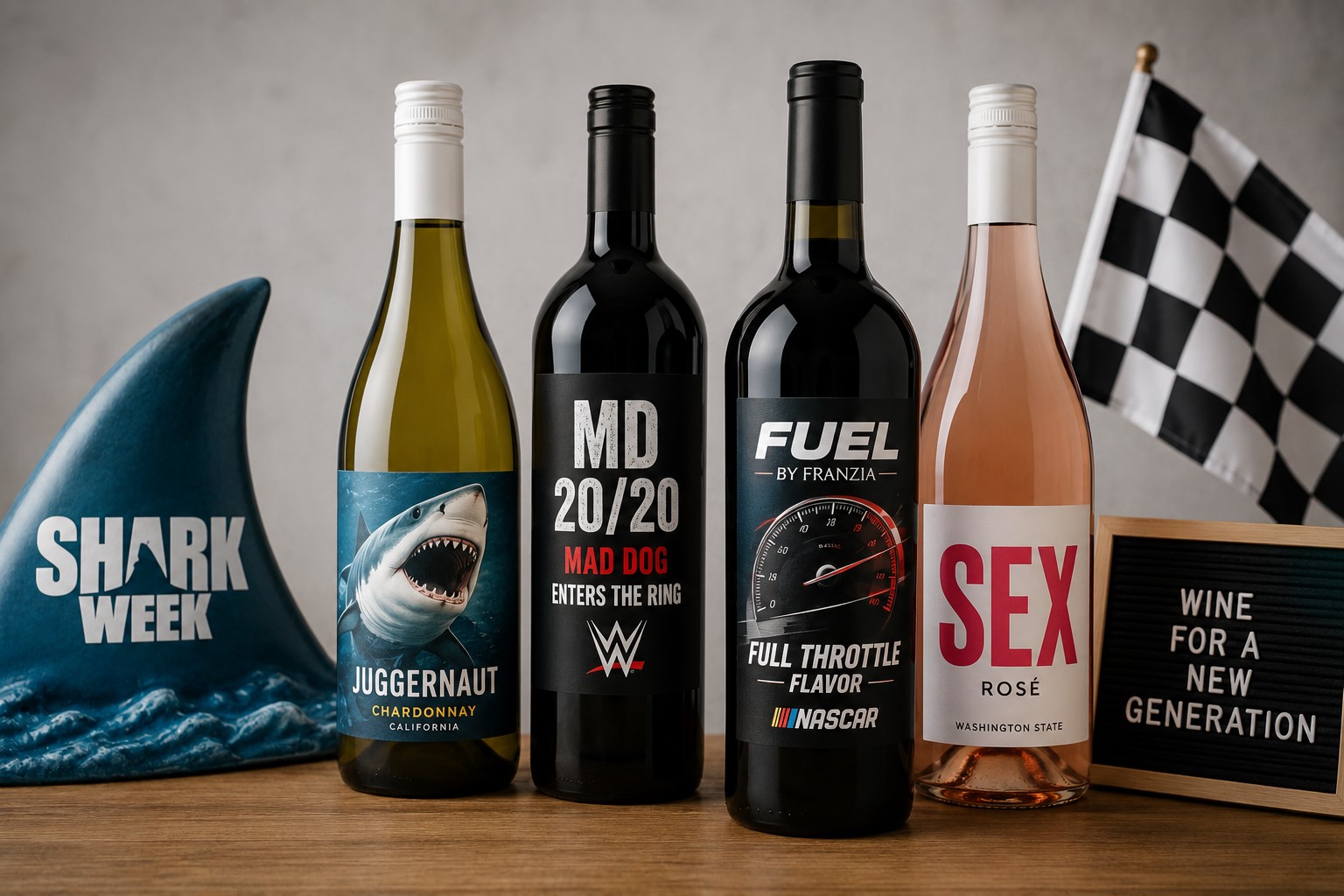
Wine Brands Embrace Pop Culture to Capture Gen Z’s Attention
As wine sales continue to decline and younger consumers increasingly choose alternatives such as hard seltzers, ready-to-drink cocktails, and non-alcoholic beverages, wine companies are rethinking how they market their products. Rather than relying on traditional images of vineyards, tasting notes, and fine dining, many brands are turning to pop culture partnerships and playful messaging to connect with Gen Z.
Industry leaders say younger consumers are looking for authenticity, humor, and accessibility rather than the formality that has long defined wine culture. To appeal to this audience, wine marketers are collaborating with major entertainment and sporting events, including Shark Week, NASCAR races, professional wrestling, and endurance events like Tough Mudder.
The strategy reflects a broader effort to make wine feel less intimidating. For decades, wine marketing often emphasized complex terminology, expensive bottles, and detailed tasting descriptions. Today's younger drinkers, however, are more likely to respond to casual language, relatable branding, and affordable options.
Several wine companies have launched brands and campaigns designed specifically for modern consumers. Labels featuring bold graphics, humorous names, and straightforward messaging are replacing traditional imagery. Some brands encourage unconventional food pairings, while others focus on lifestyle and social experiences rather than wine expertise.
Marketing executives argue that the goal is to meet consumers where they already spend their time rather than expecting them to seek out wine culture on their own. Partnerships with popular television events, sports organizations, and social media trends help brands reach audiences who may not otherwise consider purchasing wine.
Industry analysts note that wine faces unique challenges compared to other alcohol categories. Younger consumers often view wine as complicated, expensive, and difficult to understand. Many are unfamiliar with traditional wine terminology and prefer products that offer convenience and simplicity.
As the beverage industry evolves, wineries are increasingly embracing a more relaxed and approachable image. Whether through pop culture collaborations, creative branding, or social media-friendly campaigns, wine producers are betting that a fresh marketing approach can help reconnect the category with a new generation of consumers.
The shift represents one of the biggest transformations in wine marketing in recent years, as brands work to remain relevant in a rapidly changing marketplace.



Comments (0)
Sign in to join the conversation.