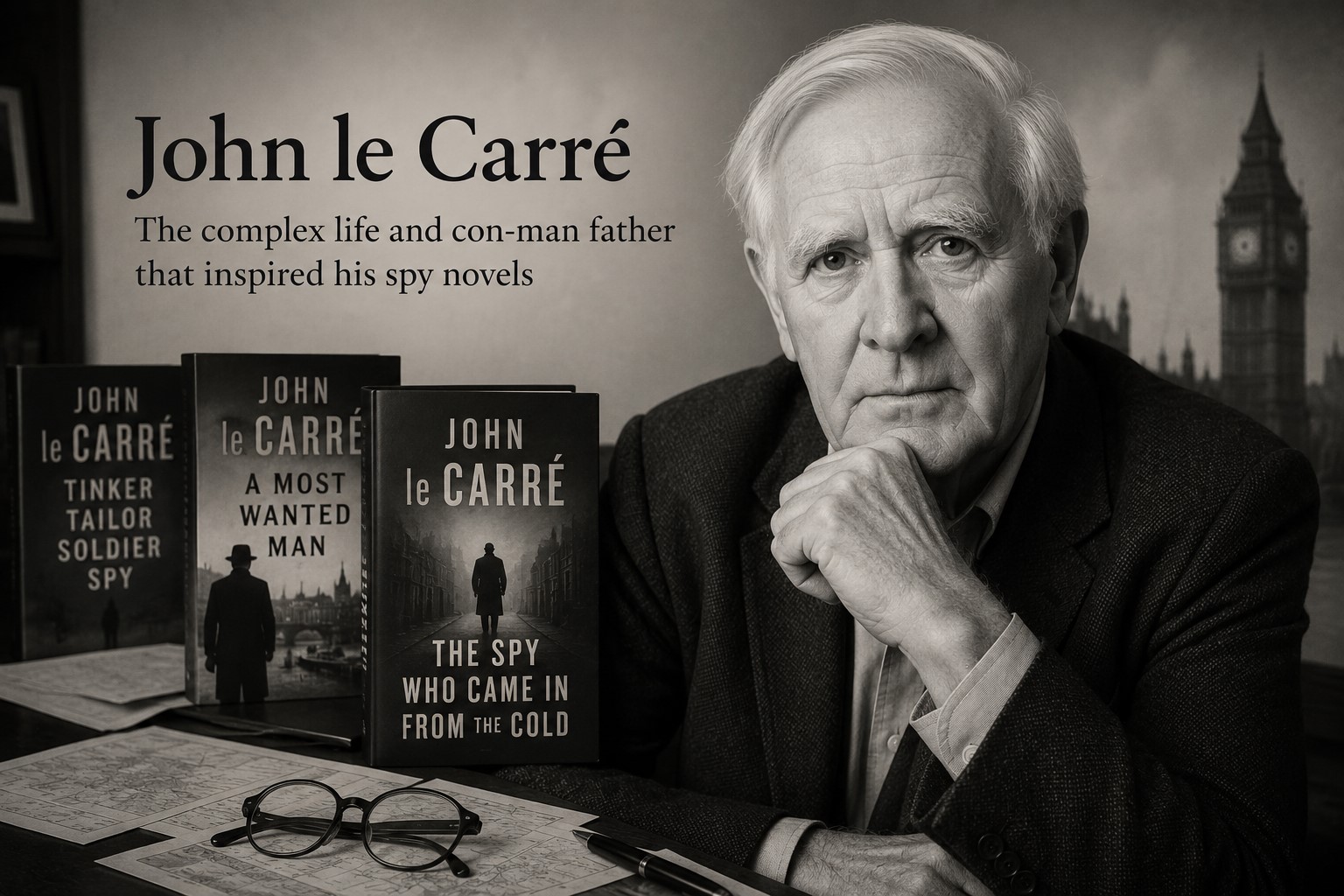
Before he became the celebrated spy novelist known as John le Carré, David Cornwell grew up in a world defined by secrecy, deception, and uncertainty. Much of that experience stemmed from his complicated relationship with his father, Ronnie Cornwell, a charismatic con man whose turbulent lifestyle would later inspire many of the themes found in Le Carré’s bestselling novels.
As a child, Cornwell learned early that appearances could be misleading. His father frequently moved between periods of wealth and financial ruin, often reinventing himself while hiding a history of fraud and imprisonment. These experiences exposed the future writer to a world where truth was fluid and trust was never guaranteed.
One childhood memory remained particularly significant. After being told to wait outside their boarding school for their father, Cornwell and his brother spent an entire day hoping he would arrive. He never did. Rather than admit they had been abandoned, the boys returned to school pretending they had enjoyed a wonderful outing. Years later, Le Carré reflected on how the episode mirrored the realities of espionage — when plans collapse, cover stories are created, and survival depends on maintaining appearances.
Growing up during World War II, Cornwell often felt embarrassed by his father's criminal reputation while classmates proudly spoke of fathers serving in the military. To protect himself from judgment, he invented stories claiming his father was a spy. Ironically, that childhood fiction would later evolve into a career writing some of the most influential espionage novels ever published.
Unlike the glamorous world portrayed by fictional spies such as James Bond, Le Carré’s work focused on the moral ambiguity and emotional isolation of intelligence operations. His famous character George Smiley was intentionally designed as an ordinary, understated figure whose greatest weapons were patience and intellect rather than action and charm.
Le Carré’s own experience in British intelligence further strengthened the realism of his novels. He served in both MI5 and MI6 before becoming a full-time author, drawing on real-world knowledge to create stories that explored political conflict, betrayal, and human vulnerability.
Biographers have often noted that Ronnie Cornwell’s influence extended far beyond providing material for stories. His father’s ability to reinvent himself, manipulate situations, and create elaborate fantasies helped shape Le Carré’s understanding of character, identity, and deception. The author later acknowledged that his father’s life of illusion taught him how to build fictional worlds and complex personalities.
Themes of loneliness, mistrust, and divided loyalties became hallmarks of Le Carré’s work. Many of his protagonists struggled with questions of identity and belonging, reflecting emotions rooted in his own childhood experiences. Home was often portrayed not as a place of comfort but as a source of danger and instability.
Despite the challenges of his upbringing, Le Carré ultimately viewed those experiences as invaluable. He credited the unusual and often chaotic world created by his father with giving him the insight, imagination, and emotional depth that defined his writing career.
Through novels such as The Spy Who Came in from the Cold and the George Smiley series, John le Carré transformed personal history into literary art, creating a new kind of spy fiction that continues to influence writers and readers around the world.



Comments (0)
Sign in to join the conversation.