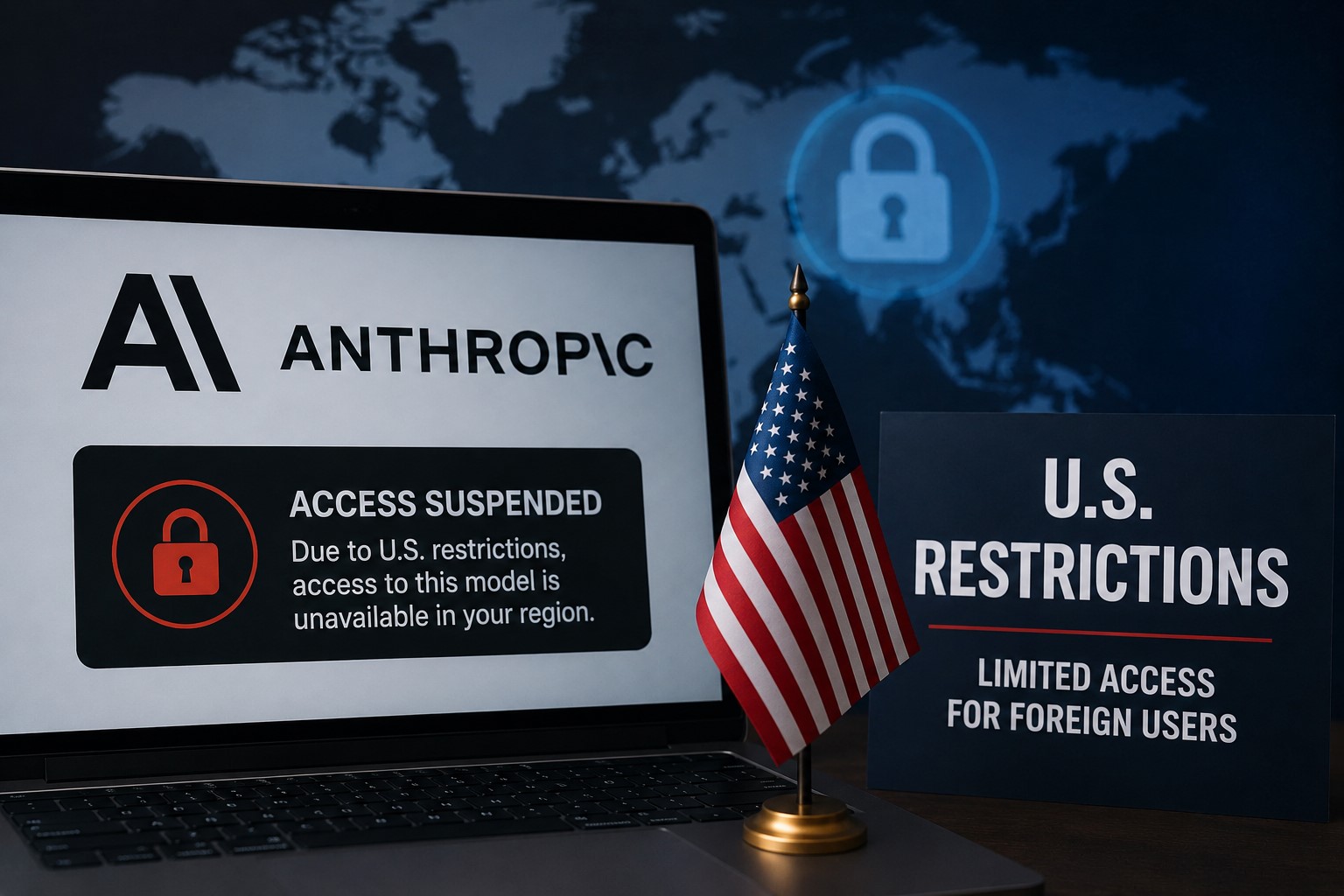
Anthropic Suspends New AI Model Access Following U.S. Restrictions on Foreign Users
Artificial intelligence company Anthropic has suspended access to its newest AI model after new U.S. government restrictions limited the availability of advanced AI technologies to certain foreign users.
The decision comes amid growing concerns in Washington over the national security implications of powerful artificial intelligence systems. U.S. officials have increasingly scrutinized the export and international deployment of cutting-edge AI models, arguing that unrestricted access could allow foreign adversaries to leverage advanced technologies for military, cyber, or intelligence purposes.
Anthropic, one of the leading AI companies competing with OpenAI, Google, and other major technology firms, said it is complying with the latest regulatory requirements while reviewing how the restrictions affect its global user base. The company has temporarily disabled access to the affected model in regions covered by the new rules and is working to ensure compliance with U.S. law.
The move highlights the growing intersection between artificial intelligence innovation and geopolitical competition. As AI systems become more capable, governments around the world are increasingly treating advanced models as strategic technologies with potential national security implications.
Industry experts warn that restrictions on AI exports could reshape the global AI market by limiting access to the most advanced systems. Companies may face new compliance challenges as governments seek to balance technological innovation with security concerns.
Supporters of the restrictions argue that advanced AI tools could be used to develop sophisticated cyberattacks, accelerate military research, or enhance surveillance capabilities if they fall into the wrong hands. They contend that stronger controls are necessary to protect national interests and maintain a technological advantage.
Critics, however, warn that tighter regulations could slow innovation, reduce international collaboration, and create barriers for researchers, businesses, and developers who rely on access to leading AI models. Some also fear that fragmented regulations could lead to the emergence of separate AI ecosystems across different regions of the world.
The suspension of Anthropic's newest model underscores the broader debate over how governments should regulate artificial intelligence as the technology becomes increasingly influential in business, research, defense, and everyday life.
As policymakers continue to develop new rules for advanced AI systems, technology companies are expected to face growing pressure to navigate a rapidly evolving regulatory landscape while maintaining global competitiveness.
Comments (0)
Sign in to join the conversation.