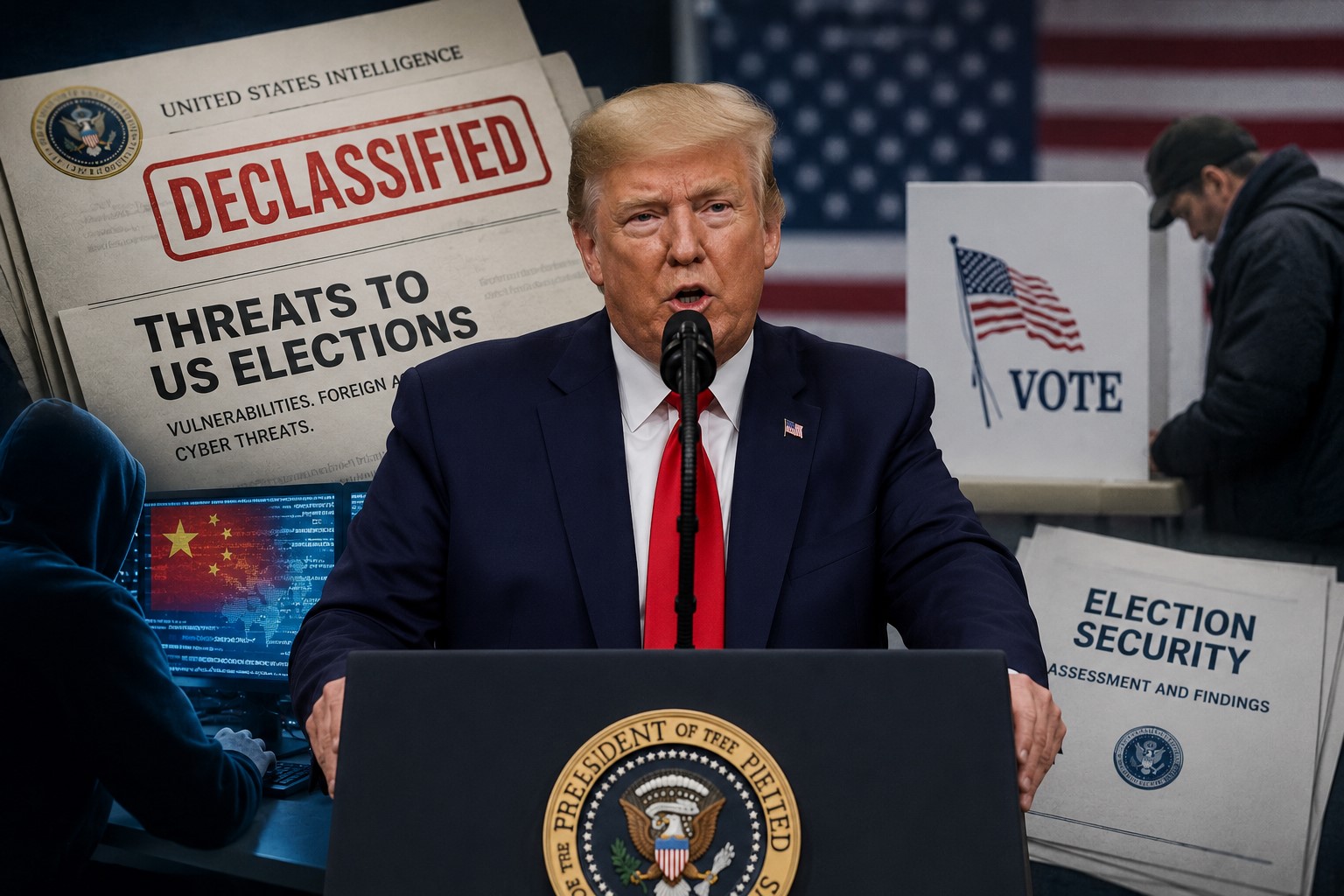
US President Donald Trump delivered a primetime address outlining what he said were newly declassified intelligence documents that highlight vulnerabilities in the American election system. The speech focused on election security, foreign cyber threats, immigration, the economy and national security, while renewing his call for stronger safeguards to protect future elections.
Trump said the release of the documents was intended to improve transparency rather than undermine public confidence in US elections. However, critics argued that his remarks could further fuel doubts about the integrity of the electoral process, particularly after his repeated claims regarding the 2020 presidential election.
Among the documents released were intelligence assessments detailing extensive cyber-espionage activities allegedly carried out by Chinese state-backed hackers. According to the reports, Chinese intelligence groups targeted US government officials and members of Joe Biden's 2020 presidential campaign in efforts to collect sensitive information.
The declassified records also revealed that Chinese actors obtained voter registration data from multiple US states. Intelligence officials noted that while some of the information was publicly available, there was no evidence that the data had been used to alter election results. Instead, analysts said the information could potentially be used for future cyber operations or influence campaigns.
Trump also raised concerns about voting technology, referencing claims involving Venezuela and electronic voting systems. The allegations echo statements previously made by former Venezuelan intelligence official Hugo "El Pollo" Carvajal, who claimed without providing evidence that voting software could be manipulated. Voting technology company Smartmatic has repeatedly denied those allegations, stating there is no evidence its systems were used to influence US election outcomes.
US intelligence assessments included in the declassified documents concluded that while foreign governments continue to conduct cyber-espionage against American institutions, there is no new evidence showing successful manipulation of US election results through electronic voting systems.
The release of the documents has renewed debate over election security, cybersecurity and foreign interference, with supporters calling for stronger protections and critics urging caution against drawing conclusions not supported by intelligence findings.



Comments (0)
Sign in to join the conversation.