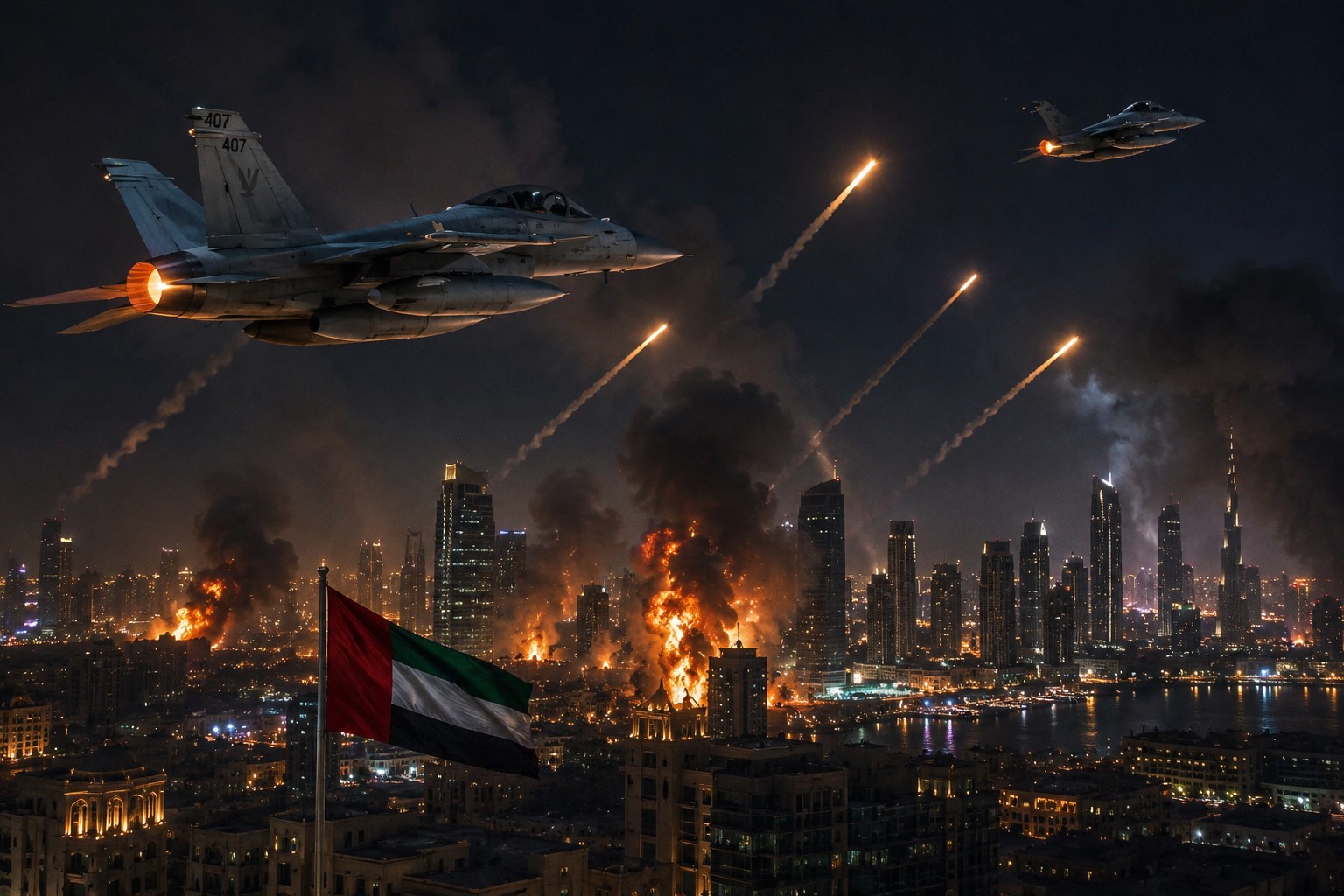
The United States carried out a sixth consecutive night of military strikes on Iranian targets, as tensions across the Middle East continued to escalate. The latest wave of operations came amid renewed attacks targeting Gulf nations, prompting regional governments to activate air defenses and strengthen security measures.
According to officials, the US strikes were aimed at military infrastructure and strategic sites linked to Iran's regional operations. The attacks are part of an ongoing campaign intended to deter further threats against American forces and allies in the region.
Meanwhile, several Gulf countries reported intercepting incoming missiles and drones during fresh attacks overnight. While authorities have not released full details on casualties or damage, governments across the region have heightened security and urged residents to remain vigilant.
The continuing exchange of military action has raised fears of a broader regional conflict, with global leaders calling for restraint and renewed diplomatic efforts. International organizations have warned that prolonged hostilities could threaten regional stability, disrupt global energy markets and worsen the humanitarian situation.
The conflict has already affected shipping routes, financial markets and oil prices, as investors closely monitor developments in one of the world's most strategically important regions. Diplomatic efforts to de-escalate the crisis remain ongoing, but no immediate breakthrough has been announced.
Analysts say the coming days will be critical in determining whether the confrontation remains limited or expands into a wider regional conflict involving additional countries.
Comments (0)
Sign in to join the conversation.