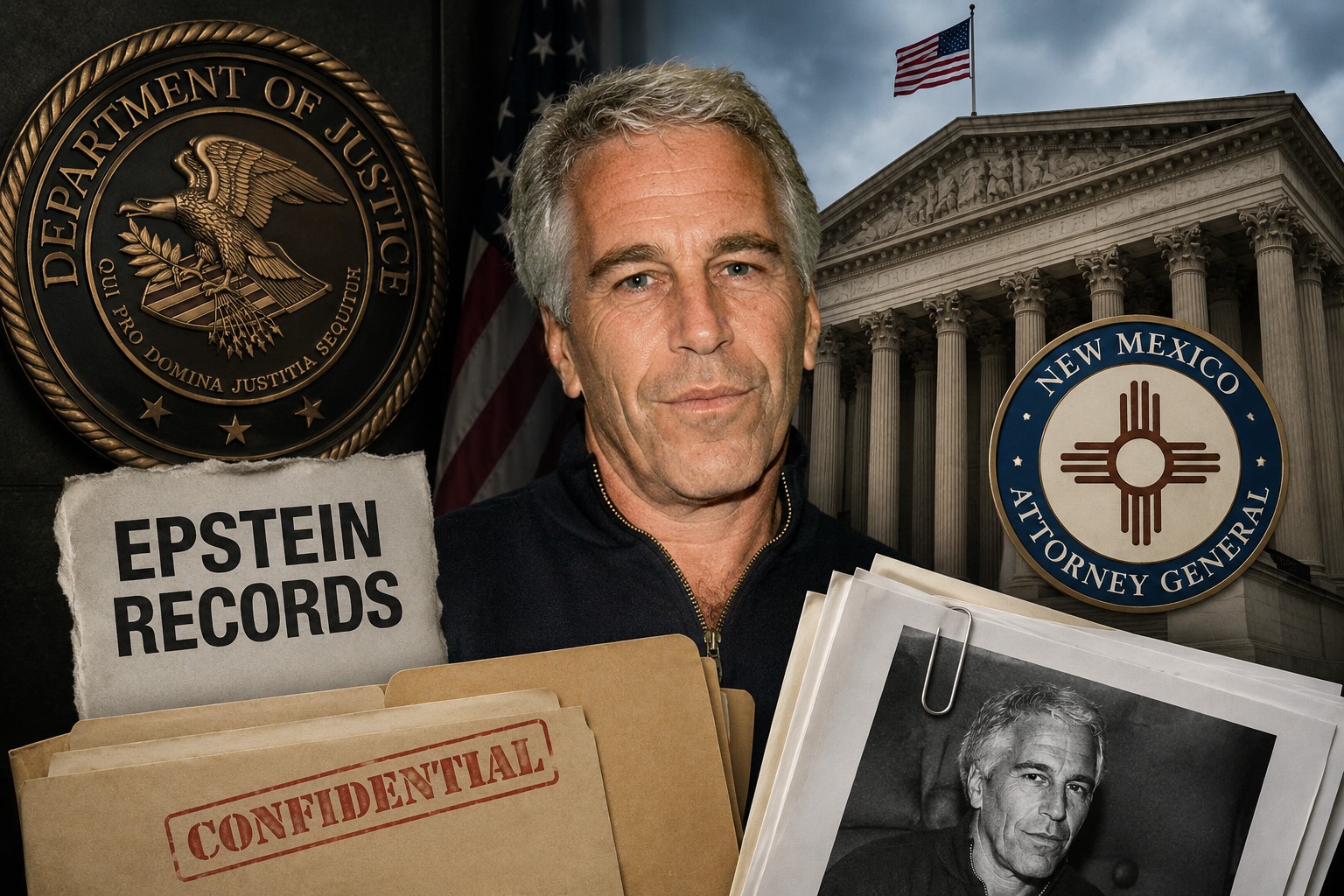
A legal dispute has emerged between the New Mexico Attorney General's Office and the U.S. Department of Justice (DOJ) over the release of records connected to convicted sex offender Jeffrey Epstein. The disagreement has renewed public attention on transparency, accountability, and the handling of high-profile investigations.
The New Mexico Attorney General has reportedly called for broader access to documents related to Epstein's activities and any records that could shed light on individuals or entities connected to his criminal network. State officials argue that greater disclosure is necessary to support ongoing legal efforts, provide answers to victims, and strengthen public confidence in the justice system.
The DOJ, however, has maintained that certain records cannot be released because they are protected by federal law, privacy requirements, and the need to preserve the integrity of ongoing or related investigations. Federal officials contend that unrestricted disclosure could compromise legal proceedings or reveal sensitive information involving victims and witnesses.
The disagreement highlights the complex legal balance between public transparency and protecting confidential investigative material. It also reflects continuing scrutiny of how authorities have handled the Epstein case and whether all relevant information has been made available to the public.
Victim advocacy groups have continued to urge officials to ensure accountability while safeguarding the identities and privacy of survivors. Legal experts note that any future release of documents is likely to be carefully reviewed by the courts to determine what information can be disclosed under federal and state law.
As the dispute continues, the case is expected to fuel broader debate over government transparency, access to public records, and the responsibilities of law enforcement agencies in high-profile criminal investigations.

Comments (0)
Sign in to join the conversation.