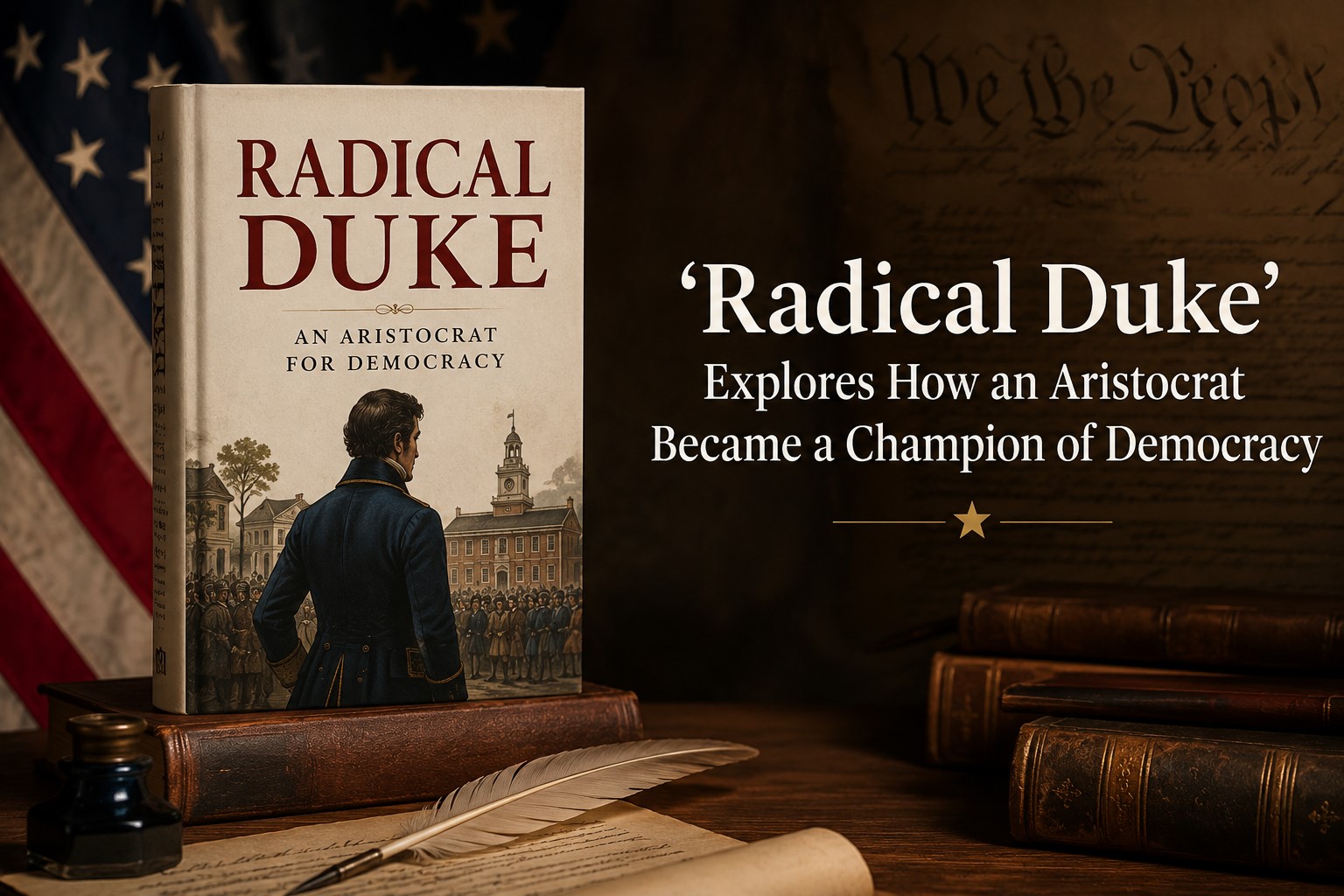
‘Radical Duke’ Explores How an Aristocrat Became a Champion of Democracy
The story of democracy’s rise is often told through the actions of revolutionaries, philosophers and ordinary citizens. Yet Radical Duke offers a different perspective, examining how members of the aristocracy themselves contributed to the spread of democratic ideals during a transformative period in history.
The book places its narrative against the backdrop of the American Revolution, a conflict that initially was not driven by a widespread desire for independence. When fighting broke out at Lexington, Massachusetts, in April 1775, many colonists still considered themselves loyal subjects of Britain. Their primary goal was to defend what they believed were their rights under British rule.
As the war intensified, however, attitudes began to shift. The conflict itself played a crucial role in radicalizing public opinion and transforming calls for reform into demands for independence. The experience of war persuaded many Americans that political separation from Britain was the only viable path forward.
A key turning point came with the publication of Thomas Paine’s Common Sense in January 1776. The pamphlet quickly became one of the most influential political writings in American history, challenging traditional ideas about monarchy and inherited privilege.
Paine criticized hereditary rule and questioned the legitimacy of aristocratic power, arguing that free societies should be governed by principles of representation and self-rule rather than inherited status. His message resonated deeply with colonists who were increasingly frustrated with British authority.
Radical Duke explores how these revolutionary ideas reached beyond the colonies and influenced political thinkers across the Atlantic. The book highlights figures who, despite their noble backgrounds, embraced democratic reforms and challenged the established order.
Through its examination of political change, privilege and reform, the work demonstrates that support for democracy sometimes emerged from unexpected places. Rather than defending traditional hierarchies, some aristocrats became advocates for broader political participation and constitutional government.
By connecting the intellectual legacy of the American Revolution with the actions of reform-minded nobles, Radical Duke offers readers a compelling look at the complex forces that helped shape modern democratic ideals.


Comments (0)
Sign in to join the conversation.