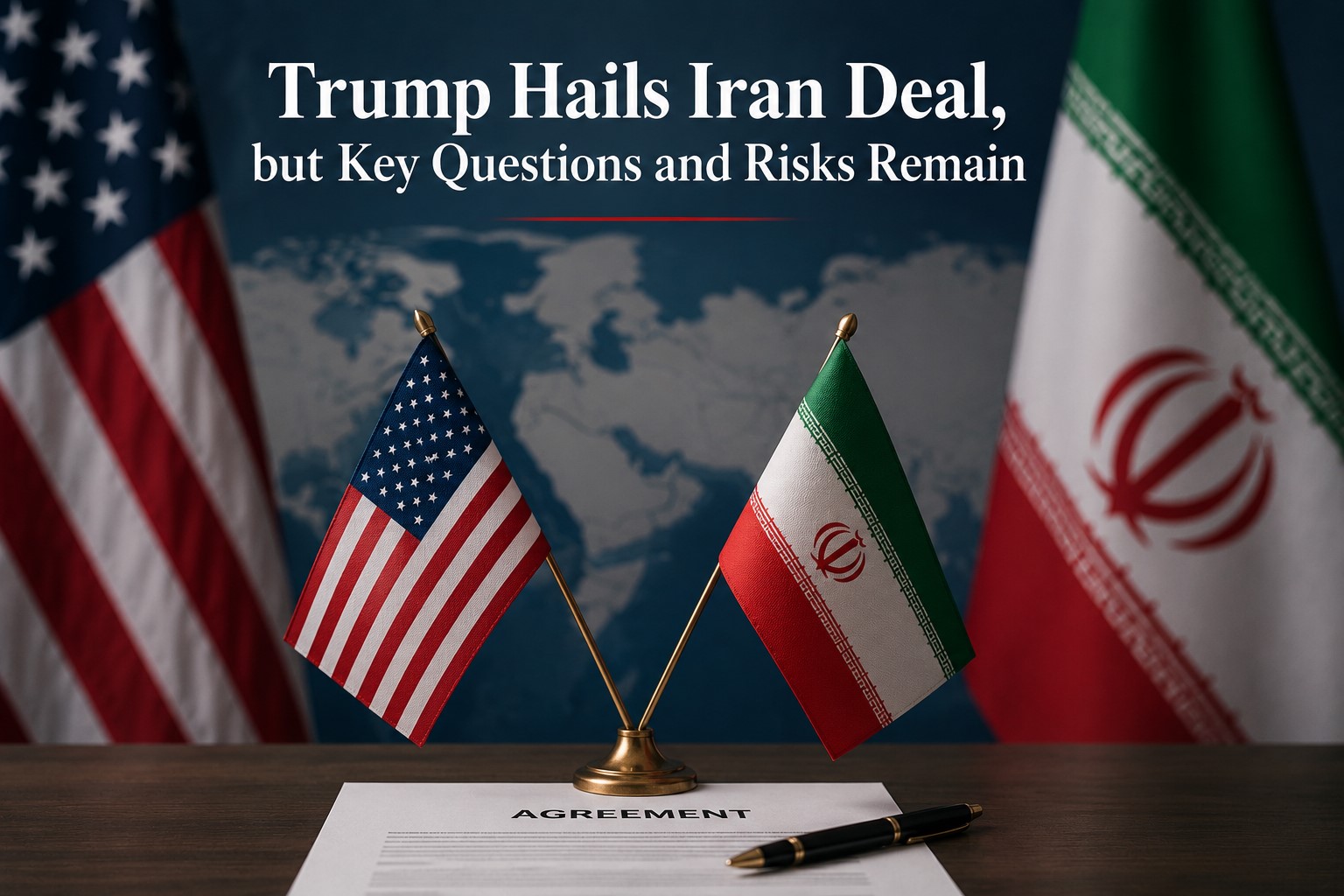
Trump Hails Iran Deal, but Key Questions and Risks Remain
President Donald Trump has celebrated a newly announced agreement with Iran as a major diplomatic breakthrough, claiming it could restore stability to the Middle East and reopen critical global energy routes. However, significant uncertainties remain over how the deal will be implemented and whether it can deliver lasting peace.
In announcing the agreement, Trump said the United States would lift its naval blockade of Iran and allow commercial shipping to resume through the Strait of Hormuz, one of the world's most important oil transit corridors. He described the deal as a historic achievement that would help reduce tensions and improve economic conditions across the region.
Despite the optimistic messaging, many details of the agreement remain unclear. Key questions persist regarding Iran’s nuclear program, including future restrictions on uranium enrichment, verification mechanisms and the handling of existing stockpiles of highly enriched uranium.
U.S. officials have insisted that preventing Iran from obtaining a nuclear weapon is a central component of the agreement. However, analysts note that the success of any long-term arrangement will depend on detailed negotiations and compliance measures that have yet to be finalized.
Iranian officials have also indicated that further negotiations will continue and that some aspects of the agreement depend on the fulfillment of commitments by both sides. The comments highlight the fragile nature of the deal and the possibility that disagreements could emerge during the implementation phase.
Energy markets reacted positively to the announcement, with oil prices falling on expectations that trade routes and energy supplies could gradually return to normal. Yet industry experts caution that reopening the Strait of Hormuz and restoring oil production will take time. Shipping backlogs, mine-clearing operations and infrastructure recovery efforts may delay a full return to pre-conflict conditions.
Regional security concerns also remain a major factor. Ongoing tensions involving Israel and other actors in the Middle East could complicate the agreement and threaten its durability. Any renewed military escalation could disrupt shipping routes and place additional pressure on global energy markets.
The economic impact of the deal will be closely watched in the United States. Rising fuel prices and broader inflation concerns have weighed on consumers in recent months, and the administration hopes lower energy costs will provide relief to households and businesses.
Political observers say the agreement could offer Trump a boost if it leads to falling gasoline prices and improved economic sentiment. However, public opinion remains mixed, and the administration faces continued scrutiny over economic challenges and foreign policy decisions.
For now, the agreement represents a significant diplomatic step, but its long-term success will depend on implementation, regional stability and the willingness of all parties to follow through on their commitments. Until those questions are resolved, uncertainty will continue to surround one of the most consequential agreements in the region in recent years.
Comments (0)
Sign in to join the conversation.