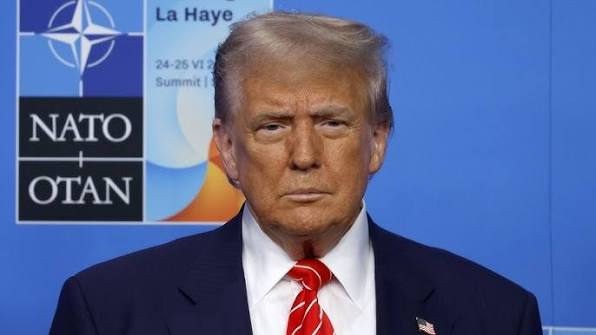
Donald Trump's relationship with NATO allies has long been marked by tension, with disagreements over defense spending, military commitments, and the future direction of the alliance. Since returning to office, his administration has renewed calls for European members to take greater responsibility for their own security, arguing that the United States has carried a disproportionate share of NATO's defense burden for decades.
One of Trump's central criticisms has been that several NATO members have failed to meet the alliance's target of spending at least 2% of their gross domestic product (GDP) on defense. He has repeatedly argued that countries benefiting from NATO's collective security should contribute more financially rather than relying heavily on U.S. military support. While many European nations have increased defense budgets in recent years, Trump has continued to press allies to accelerate those efforts.
The administration's tougher stance has generated mixed reactions across Europe. Supporters argue that Trump's pressure has encouraged several NATO members to strengthen their military capabilities and invest more in national defense. Critics, however, contend that his confrontational rhetoric risks undermining trust among allies and weakening the unity that has defined the alliance for more than seven decades.
The ongoing conflict in Ukraine has further highlighted the importance of close cooperation among NATO members. While the alliance remains committed to supporting Ukraine and strengthening collective defense, differences occasionally emerge over funding, military aid, and long-term security strategies. These debates have placed renewed attention on the role of U.S. leadership within NATO and the balance between encouraging greater European responsibility and maintaining alliance cohesion.
Despite periodic disagreements, NATO continues to conduct joint military exercises, intelligence sharing, and coordinated security operations across Europe and beyond. Alliance leaders have consistently emphasized that collective defense remains the foundation of NATO, even as members debate how responsibilities and costs should be shared more evenly.
Foreign policy analysts note that Trump's approach reflects a broader "America First" strategy, prioritizing U.S. national interests while urging allies to assume a larger role in regional security. Whether this strategy ultimately strengthens NATO by encouraging greater burden-sharing or creates lasting political divisions remains a subject of debate among policymakers and security experts.
As global security challenges continue to evolve, the relationship between the United States and its NATO allies will remain a key factor shaping international stability. Decisions on defense investment, military cooperation, and diplomatic engagement are expected to influence the alliance's effectiveness and unity for years to come.


Comments (0)
Sign in to join the conversation.