How ‘Dupe Culture’ Is Changing the Way Consumers Shop
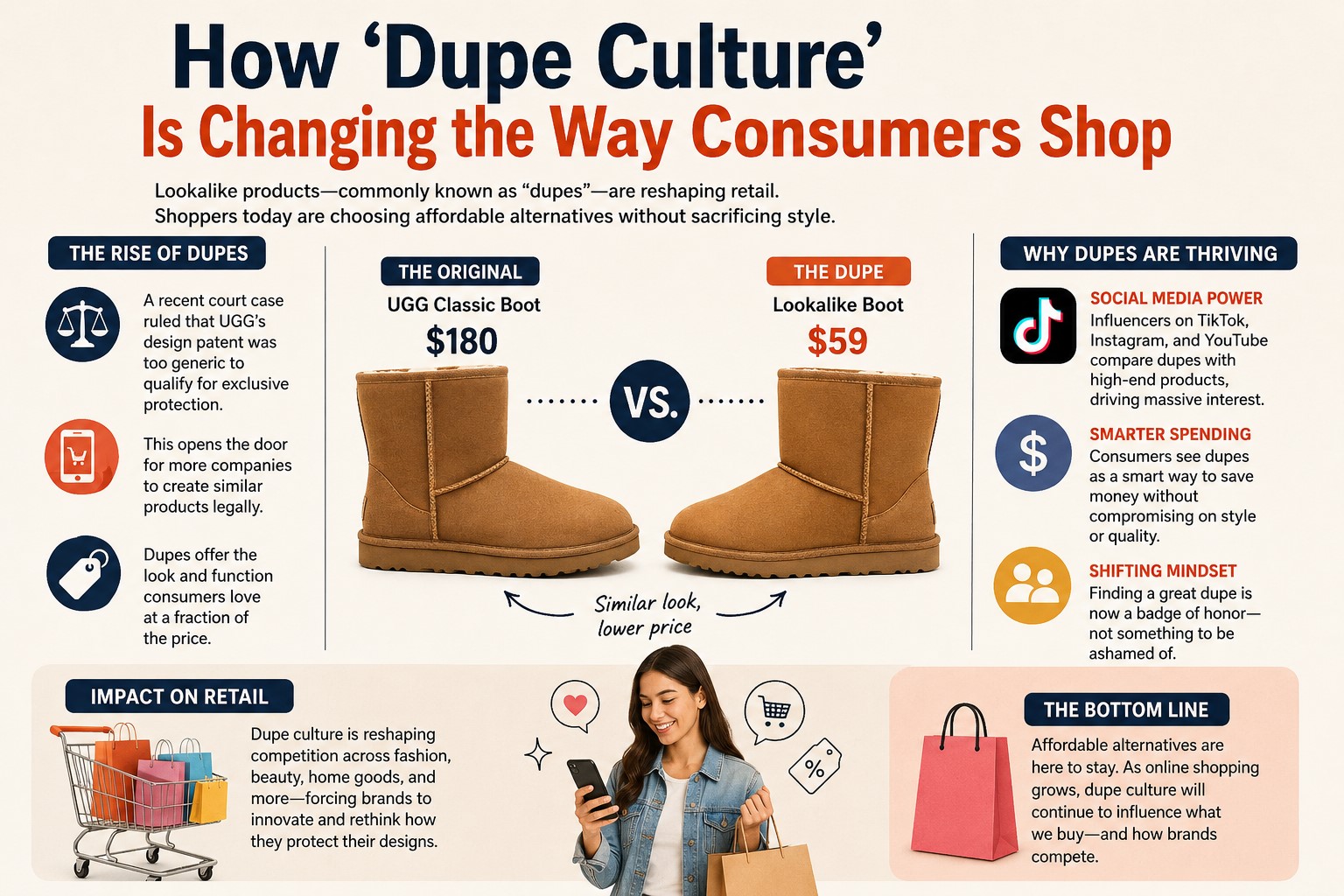
Once viewed as something to avoid, lookalike products—commonly known as "dupes"—have become one of the fastest-growing trends in modern retail. Consumers are increasingly choosing affordable alternatives to premium brands, turning dupe culture into a powerful force that is reshaping shopping habits and challenging established companies.
The growing popularity of dupes was recently highlighted in a legal dispute between footwear giant Deckers, the parent company of UGG, and online retailer Quince. The case centered on Quince's shearling boots, which closely resembled UGG's iconic design. Although a jury agreed that Quince had copied the appearance of the boots, it also ruled that UGG's design patent should never have been granted because the design was considered too generic to qualify for exclusive legal protection. The decision effectively allows other companies to produce similar-looking boots without infringing the patent.
The case reflects the rapid rise of dupe culture, where brands create products that closely resemble popular designer or premium items while avoiding trademark and copyright violations. Unlike counterfeit goods that illegally copy logos and branding, dupes are marketed under different brand names and are designed to offer a similar appearance or function at a much lower price.
Social media platforms such as TikTok, Instagram, and YouTube have accelerated the trend, with influencers regularly sharing videos that compare expensive products with budget-friendly alternatives. These recommendations have helped normalize dupes, transforming them from inexpensive substitutes into sought-after shopping discoveries.
Changing consumer attitudes have also fueled the movement. Rather than feeling embarrassed about purchasing a lower-cost alternative, many shoppers now see finding a quality dupe as a smart financial decision. Rising living costs and greater price awareness have encouraged consumers to seek products that deliver similar style or performance without the premium price tag.
As online shopping continues to expand, dupe culture is becoming an increasingly important part of the retail landscape. While luxury and premium brands continue to defend their intellectual property through legal action, consumer demand for affordable alternatives shows little sign of slowing. The growing acceptance of dupes is reshaping competition across fashion, beauty, home goods, and consumer products, forcing brands to rethink how they protect their designs while meeting evolving customer expectations.
Comments (0)
Sign in to join the conversation.