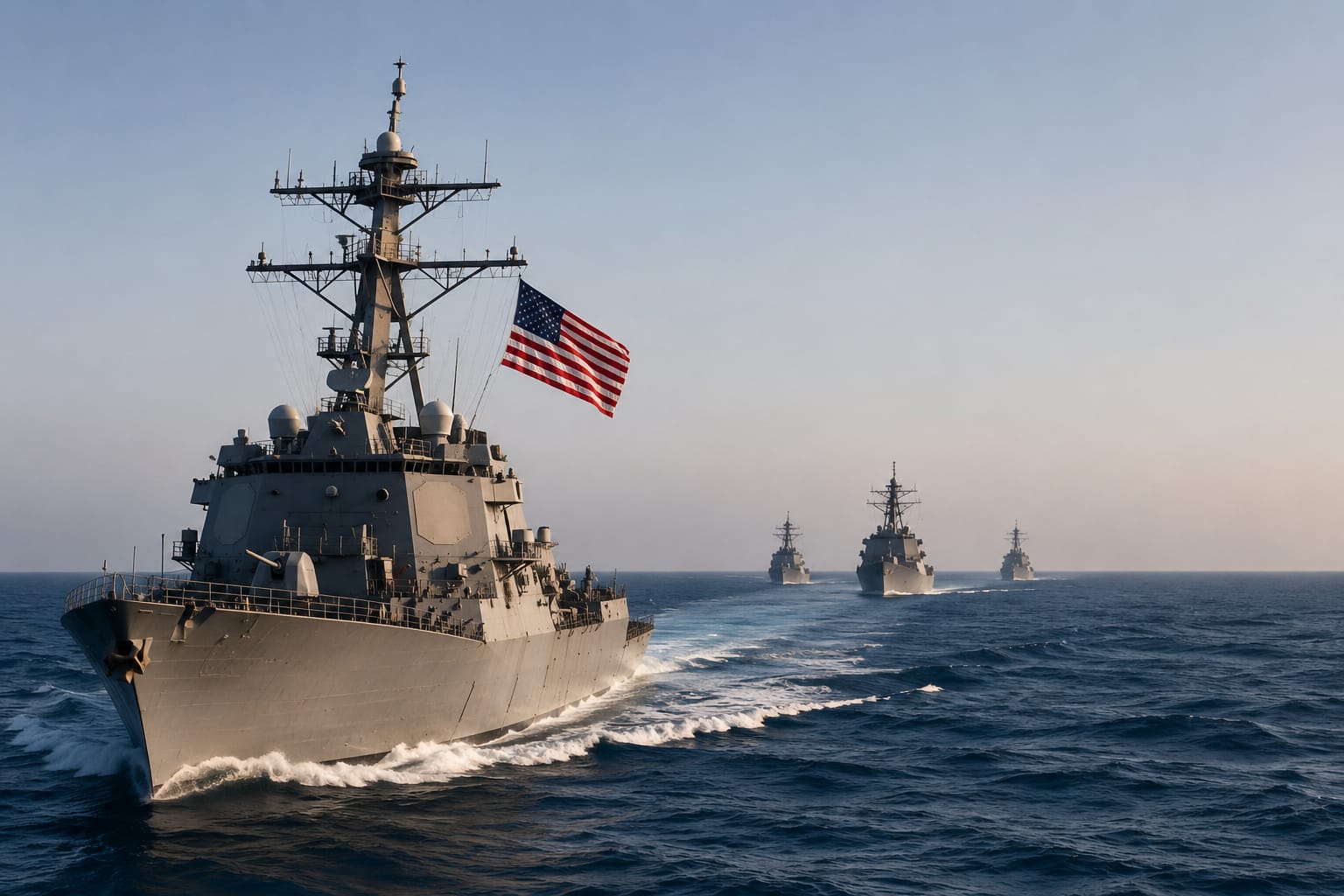
The United States has officially ended its naval blockade of Iran following a new agreement aimed at ending months of conflict and easing tensions across the Middle East. U.S. Central Command confirmed that the blockade was lifted under President Donald Trump’s direction, although some American naval forces will remain in the region to monitor security developments.
Iran’s Supreme Leader, Mojtaba Khamenei, has publicly endorsed the agreement, marking his first comments since the deal was announced. While acknowledging that he held reservations about the arrangement, Khamenei said he approved it after receiving assurances from President Masoud Pezeshkian that Iran’s national interests and sovereignty would be protected.
Khamenei also accused President Trump of using political and economic pressure to secure the agreement, describing the deal as a result of American “desperation.” Despite his criticism, he confirmed that future face-to-face negotiations between Tehran and Washington are expected to continue, though he stressed that Iran would not automatically accept U.S. positions during those talks.
The agreement contains several major provisions, including the reopening of the Strait of Hormuz, commitments aimed at preventing Iran from acquiring nuclear weapons, and the creation of a $300 billion reconstruction and economic development fund for Iran. The deal also establishes a 60-day framework for negotiating a comprehensive long-term agreement, with the possibility of extending discussions if both sides agree.
Although a formal signing ceremony had been planned in Switzerland, officials later confirmed that the agreement was finalized remotely. Representatives from both countries are still expected to meet in Switzerland for technical negotiations and follow-up discussions.
Vice President JD Vance said the agreement has already taken effect and defended the administration’s approach amid criticism from some lawmakers. He emphasized that Iran would only receive economic benefits if it complies with key obligations, including dismantling its stockpile of enriched uranium and ending support for regional proxy groups.
The agreement has sparked debate in Washington, particularly among Republican lawmakers who argue that the terms are too favorable to Tehran. Critics contend that Iran’s nuclear ambitions remain a concern and question the inclusion of a large reconstruction fund.
Regional tensions also remain high. Israel and the Iran-backed Hezbollah movement have continued exchanging strikes despite the agreement, with both sides disputing whether the deal applies to their separate conflict. U.S. officials have urged all parties to support ongoing diplomatic efforts and avoid actions that could undermine the fragile peace process.
Comments (0)
Sign in to join the conversation.