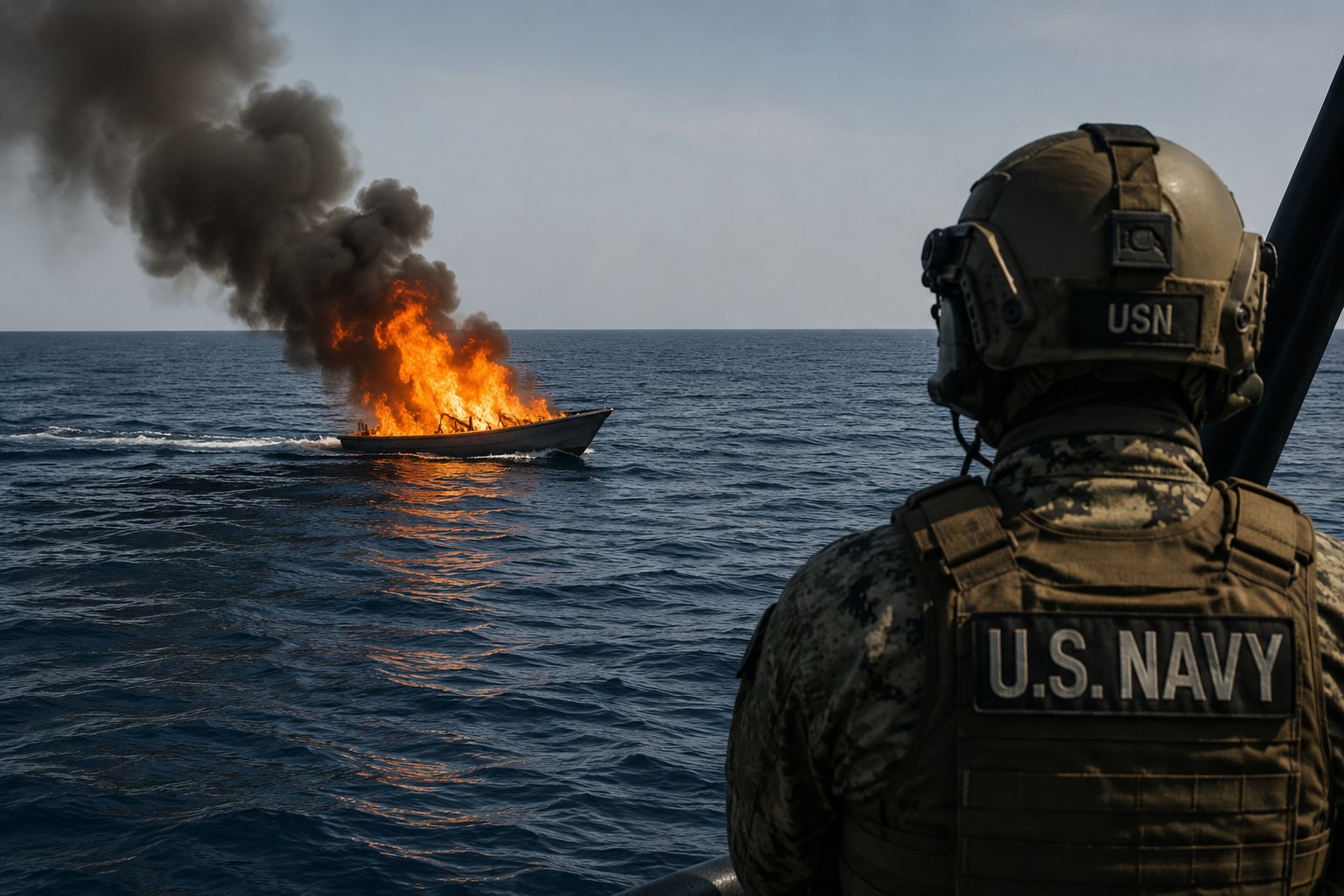
The latest U.S. military strike on a suspected drug-smuggling vessel has brought the reported death toll from such operations to at least 211 since the Trump administration launched its campaign against what it describes as “narcoterrorists” in September.
According to U.S. Southern Command, the operation targeted a boat traveling along a route commonly used for narcotics trafficking in the eastern Pacific Ocean. As in previous cases, officials did not provide evidence publicly linking the vessel to drug smuggling. Footage shared on social media showed a speedboat racing across the water before being hit and engulfed in flames.
President Donald Trump has defended the military campaign, arguing that the United States is engaged in an “armed conflict” with Latin American drug cartels. The administration says the strikes are necessary to curb the flow of illicit drugs and reduce overdose deaths in the U.S. However, critics contend that the government has offered limited proof that those killed were involved in drug trafficking.
The operations have sparked legal and policy debates. Opponents question both the legality and effectiveness of the strikes, noting that much of the fentanyl fueling the U.S. overdose crisis is transported across land routes from Mexico, where it is manufactured using chemicals imported from China and India.
Pressure on the Pentagon intensified this week as senators called for the release of unedited footage from the military operations. One of the most controversial incidents occurred during the first strike of the campaign, when survivors of an initial attack were reportedly killed in a second strike while clinging to wreckage. The White House defended the action as self-defense and said it complied with the laws of armed conflict.
Legal experts have challenged that explanation, arguing that targeting survivors could violate international law regardless of the conflict designation. Meanwhile, the Pentagon’s inspector general has launched a review of whether military officials followed established targeting procedures, though the investigation will not examine the broader legality of the strikes.
Comments (0)
Sign in to join the conversation.